2014 United States Senate Elections Results Map
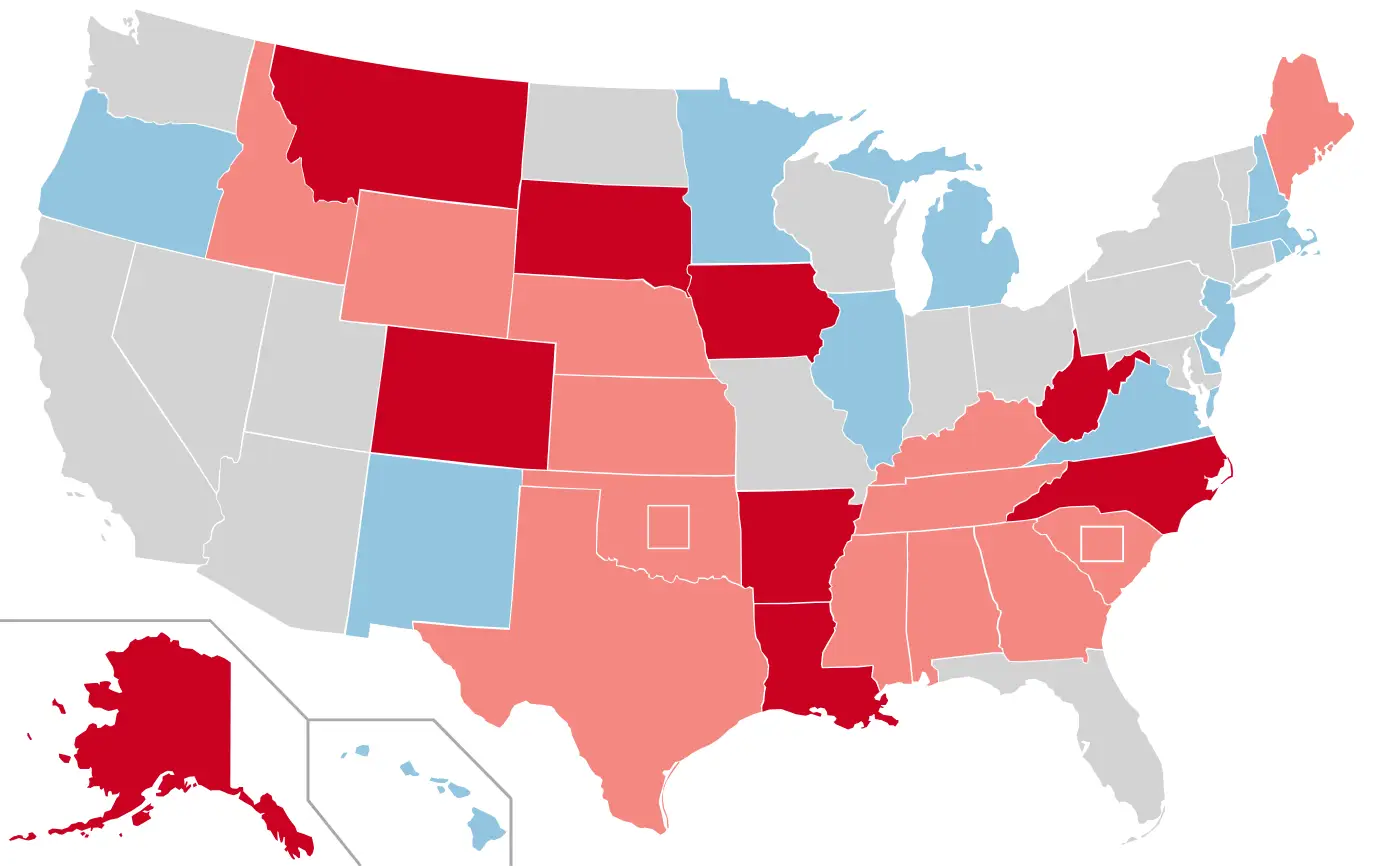
Click or tap the map to enlarge it.
Key Takeaways
- The 2014 United States Senate Elections Results Map showcases the outcome of the senatorial elections held in various states across the country.
- This map illustrates the party-wise distribution of Senate seats after the 2014 elections, giving an overview of the political landscape during that time.
- By examining this map, one can understand the power dynamics and political shifts that occurred during the 2014 Senate elections.
History
The 2014 United States Senate Elections were held on November 4, 2014, alongside other midterm elections. During this time, 33 of the 100 seats in the United States Senate were up for election.
The Senate elections in 2014 were crucial as they played a significant role in shaping the future of American politics. The outcome of these elections impacted the balance of power and influenced the legislative agenda of the United States.
At the beginning of 2014, the Senate had a Democratic majority headed by Majority Leader Harry Reid. The elections, however, favored the Republican Party, leading to a significant shift in power.
Unique Insights
Examining the 2014 United States Senate Elections Results Map reveals a few interesting insights:
- The Republican Party gained control of the Senate after the 2014 elections, taking 54 seats compared to the Democratic Party’s 44 seats.
- Some key battleground states saw close races, contributing to the overall political uncertainty.
- The elections served as a referendum on President Barack Obama’s policies, as his approval ratings were a major factor in the campaigns.
Table of Relevant Facts
| State | Democratic Party Seats | Republican Party Seats |
|---|---|---|
| Alabama | 0 | 2 |
| Alaska | 0 | 2 |
| Arizona | 1 | 1 |
| Arkansas | 0 | 2 |
Frequently Asked Questions (FAQ)
-
What impact did these Senate elections have on U.S. politics?
The 2014 Senate elections resulted in a shift of power, granting the Republican Party control of the Senate. This influenced the legislative agenda and altered the dynamics of decision-making in the United States.
-
Did any states experience tight races during the 2014 elections?
Yes, several states saw closely contested races, which added to the overall political uncertainty. Some key battleground states, such as Alaska, Arkansas, and Colorado, had competitive races.
-
How did President Barack Obama’s approval ratings impact the outcome?
President Obama’s approval ratings played a significant role in the campaigns. As his policies were a crucial point of contention, candidates aligned themselves based on their support for or opposition to the administration, consequently influencing voter decisions.
-
Which party gained control of the Senate after the 2014 elections?
The Republican Party gained control of the Senate, securing 54 seats compared to the Democratic Party’s 44 seats.
-
Were there any major surprises during the 2014 Senate elections?
There were a few surprises during the 2014 Senate elections. Some candidates, initially considered underdogs, managed to secure their victories. Furthermore, the overall shift in power caught many political analysts off guard.
-
How did the 2014 Senate elections shape the legislative agenda?
The Republican Party’s control of the Senate allowed them to have more influence over the legislative agenda. It affected the ability to pass legislation, confirm nominees, and set the priorities of the chamber.
-
How often are Senate elections held in the United States?
Senate elections are held every two years, with approximately one-third of the Senate seats up for election during each cycle. This ensures that the Senate represents the changing political landscape of the country over time.