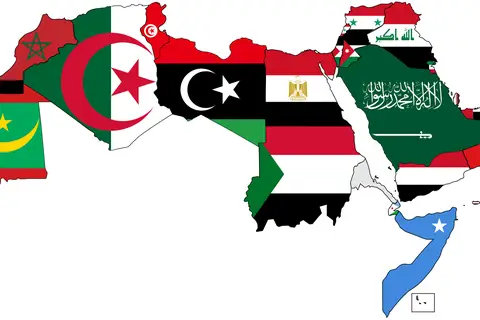
Arabic Varieties Map
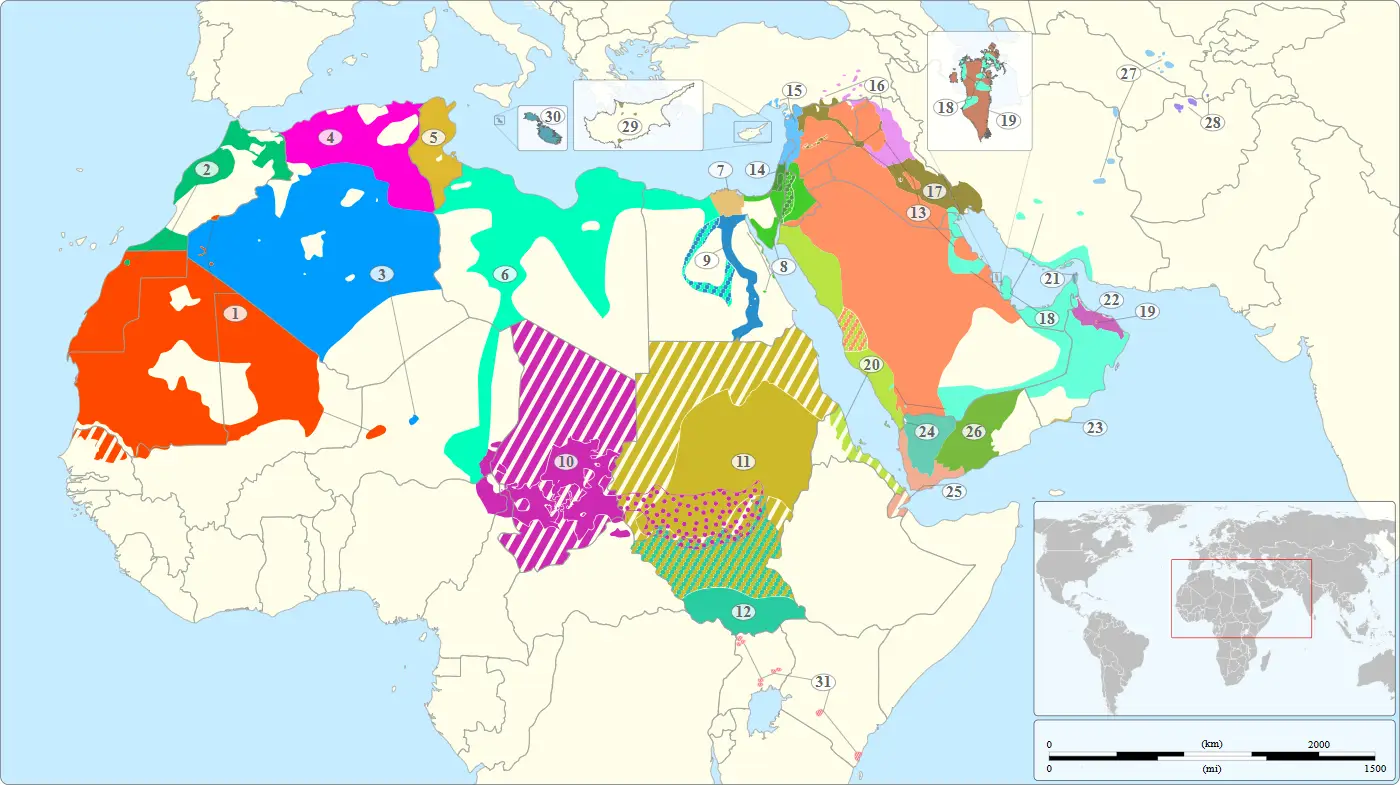
Click or tap the map to enlarge it.
Arabic Varieties Map – Key Takeaways
- The Arabic Varieties Map showcases the diverse Arabic dialects spoken across the world.
- Arabic is a Semitic language with numerous regional variations in pronunciation, vocabulary, and grammar.
- Understanding the linguistic diversity of Arabic is crucial for cultural appreciation and effective communication in the Arab world.
- The map provides a visual representation of the geographical distribution of different Arabic dialects.
History of Arabic Language and Dialects
The Arabic language has a rich history spanning over 1,500 years and is one of the world’s major languages. It originated in the Arabian Peninsula and gradually spread through conquests and trade routes, influencing various regions across North Africa, the Middle East, and parts of Asia and Europe.
Over time, Arabic diversified into regional dialects due to geographical, historical, and social factors. These variations in dialects evolved independently, resulting in distinct linguistic characteristics.
Unique Insights
1. Geographical Influence: The diverse topography and historical interactions with other languages and cultures have influenced the development of Arabic dialects.
2. Pronunciation Differences: Arabic dialects exhibit variations in pronunciation, including vowel sounds, consonant shifts, and word stress patterns.
3. Vocabulary Variation: Regional Arabic dialects often have unique vocabulary, with borrowings from other languages or the retention of archaic words.
4. Grammatical Differences: While Modern Standard Arabic (MSA) serves as the written and formal language, dialects may have different grammatical structures.
Relevant Facts
| Year | Event |
|---|---|
| 7th century CE | The expansion of the Islamic Empire introduced Arabic beyond the Arabian Peninsula. |
| 8th-15th centuries CE | The Golden Age of Arabic literature and scholarship. |
| 19th-20th centuries CE | Influence of European colonialism impacted the Arab world. |
Frequently Asked Questions (FAQ)
-
Which Arabic variety is most widely understood?
Modern Standard Arabic (MSA) serves as a lingua franca across the Arab world and is widely understood among educated Arab speakers.
-
How many dialects of Arabic are there?
There are numerous dialects, estimated to be around 30-35 major dialect groups, with further sub-dialects within each group.
-
Can Arabic speakers from different regions understand each other?
While speakers of different dialects may communicate to some extent, there could be significant challenges due to differences in vocabulary, pronunciation, and grammar.
-
Which dialect is spoken in the Arabian Peninsula?
Gulf Arabic dialects, such as Saudi Arabian Arabic, Bahraini Arabic, and Omani Arabic, are predominantly spoken in the Arabian Peninsula.
-
Are there any written resources available for Arabic dialects?
While Modern Standard Arabic (MSA) is the standard for written Arabic, efforts are being made to document and standardize various dialects, resulting in the creation of written materials for certain dialects.
-
Can you learn one dialect and understand others?
Learning one dialect can facilitate understanding of related dialects, but differences can still present challenges. Mastery of Modern Standard Arabic (MSA) is advantageous for broader comprehension.
-
What factors contribute to the divergence of Arabic dialects?
Geographical isolation, historical events, contact with other languages, and variations in cultural practices have all contributed to the divergence of Arabic dialects over time.
For more information about Arabic dialects and the Arabic language, you may visit the following external links: