Battle of Thermopylae and Movements to Salamis and Plataea Mapen
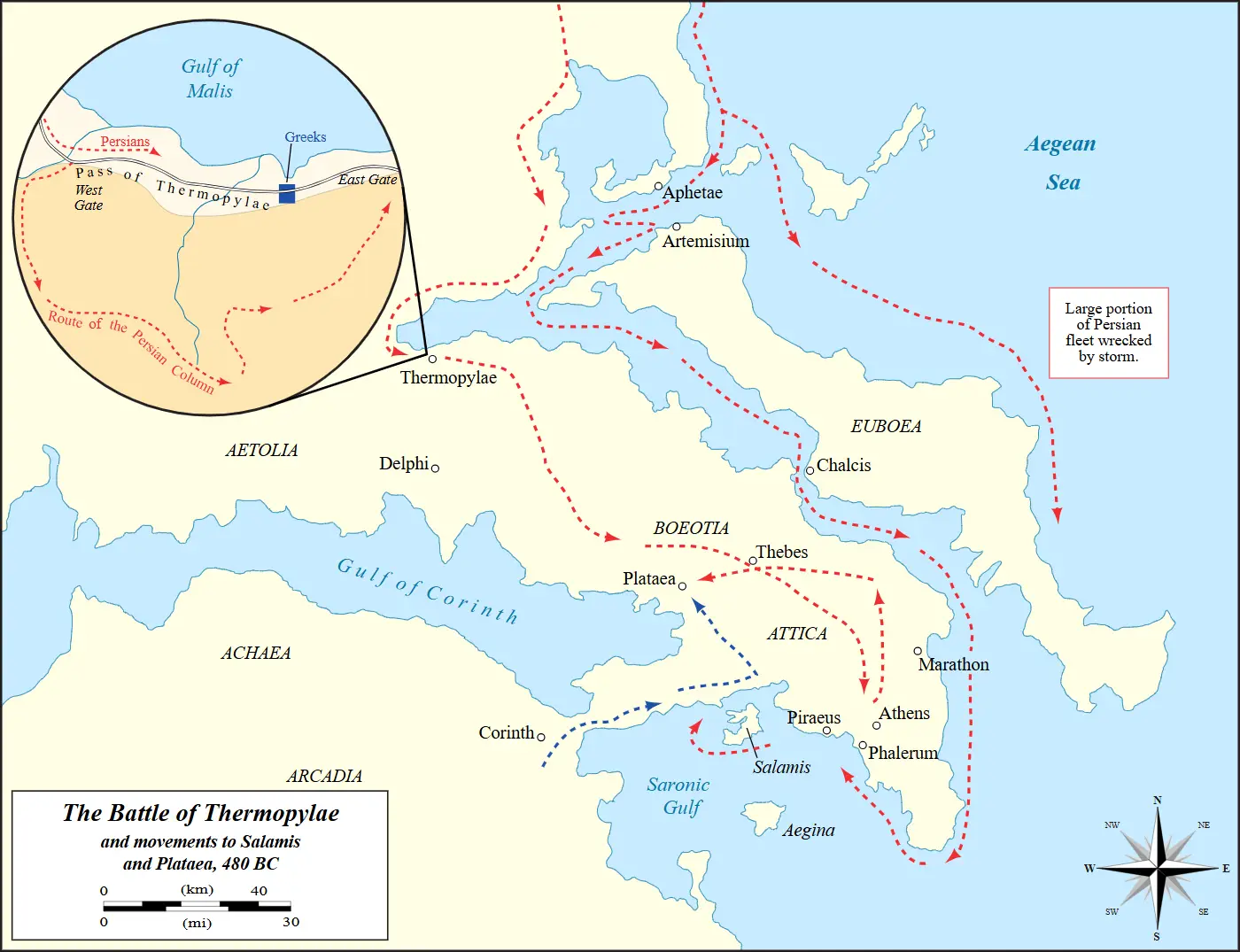
Click or tap the map to enlarge it.
Battle Of Thermopylae And Movements To Salamis And Plataea Mapen
Key Takeaways
- The Battle of Thermopylae was a significant event in ancient Greek history.
- This map showcases the movements and pivotal locations during the battle and subsequent events.
- The Battle of Salamis and the Battle of Plataea are also highlighted on this map.
- Understanding the geography of these locations is crucial to grasping the historical context.
- The map offers a visual representation of the strategies and tactics employed by both sides.
History
The Battle of Thermopylae, fought in 480 BCE between the Greek city-states led by King Leonidas of Sparta and the Persian Empire led by King Xerxes, is one of the most renowned battles in history. It took place in the narrow coastal pass of Thermopylae, which restricted the movement of the massive Persian army.
The Greeks, vastly outnumbered, displayed incredible bravery and military prowess by holding off the Persian forces for several days. However, they were ultimately defeated due to betrayal and overwhelming numbers. Despite the loss, the Battle of Thermopylae became a symbol of Greek resistance against Persian invasion.
Following the Battle of Thermopylae, the Greek fleet’s movements played a crucial role in the subsequent events. The Greeks, recognizing the strategic importance of the island of Salamis, decided to withdraw there. The Persian forces pursued them, leading to the Battle of Salamis. The Greek navy, led by Themistocles, managed to defeat the Persian fleet in a decisive victory. This marked a turning point in the Persian Wars.
At the Battle of Plataea, which occurred in 479 BCE, the remaining Persian forces faced a united Greek army composed of both Spartan and Athenian troops. The Greeks emerged victorious, effectively ending the Persian invasion of Greece.
Unique Insights
- The Battle of Thermopylae was fought near the coast, which limited the Persian army’s ability to utilize its vast numbers effectively.
- The Greek city-states demonstrated exceptional military strategies and tactics during the battle.
- The retreat to the island of Salamis allowed the Greek navy to regroup and plan their counter-attack against the Persian fleet.
- The Battle of Salamis showcased the naval capabilities of the Greeks, as they utilized their knowledge of local waters to unleash a devastating blow to the Persians.
- The Battle of Plataea solidified Greek victory and maintained the independence of the Greek city-states.
Table of Relevant Facts
| Event | Date | Location |
|---|---|---|
| Battle of Thermopylae | 480 BCE | Thermopylae, Greece |
| Battle of Salamis | 480 BCE | Salamis Island, Greece |
| Battle of Plataea | 479 BCE | Plataea, Greece |
Frequently Asked Questions (FAQ)
1. What was the significance of the Battle of Thermopylae?
The Battle of Thermopylae marked a significant moment in ancient Greek history, symbolizing the resilience and courage of the Greek city-states against the mighty Persian Empire.
2. What was the outcome of the Battle of Salamis?
The Battle of Salamis resulted in a decisive Greek victory, turning the tide of the Persian Wars and demonstrating the naval superiority of the Greek fleet.
3. Who led the Greek forces in the Battle of Plataea?
The Greek forces in the Battle of Plataea were led by a combined army, with notable leaders such as Pausanias of Sparta and Aristides of Athens.
4. How did the geography of Thermopylae impact the battle?
The narrow coastal pass of Thermopylae limited the movement and effectiveness of the massive Persian army, allowing the Greek city-states to hold them off for several days.
5. Why is the Battle of Thermopylae considered a heroic stand?
Although the Greeks ultimately faced defeat, King Leonidas of Sparta and his 300 warriors chose to defend their land against overwhelming odds, sacrificing their lives to inspire future generations.
6. What role did the Greek navy play in the Persian Wars?
The Greek navy played a crucial role in the Persian Wars, particularly in the battles of Salamis and Plataea. Their naval superiority and strategic maneuvers helped secure Greek victory.
7. How did the Battle of Plataea shape the outcome of the Persian invasion?
The Battle of Plataea marked the final major battle of the Persian Wars and resulted in a Greek victory. It effectively ended the Persian invasion and maintained Greek independence.
External Links
- Battle of Thermopylae – Britannica
- Battle of Thermopylae – History.com
- Battle of Salamis – Britannica
List of LSI (Latent Semantic Indexing) Keywords
- Battle of Thermopylae
- Greek city-states
- Persian Empire
- King Leonidas
- King Xerxes
- Thermopylae pass
- Battle of Salamis
- Battle of Plataea
- Ancient Greek history
- Persian Wars
- Greek navy
- Geography of Thermopylae
- Greek independence
- Strategic importance of Salamis