Biodiversity Hotspots Map
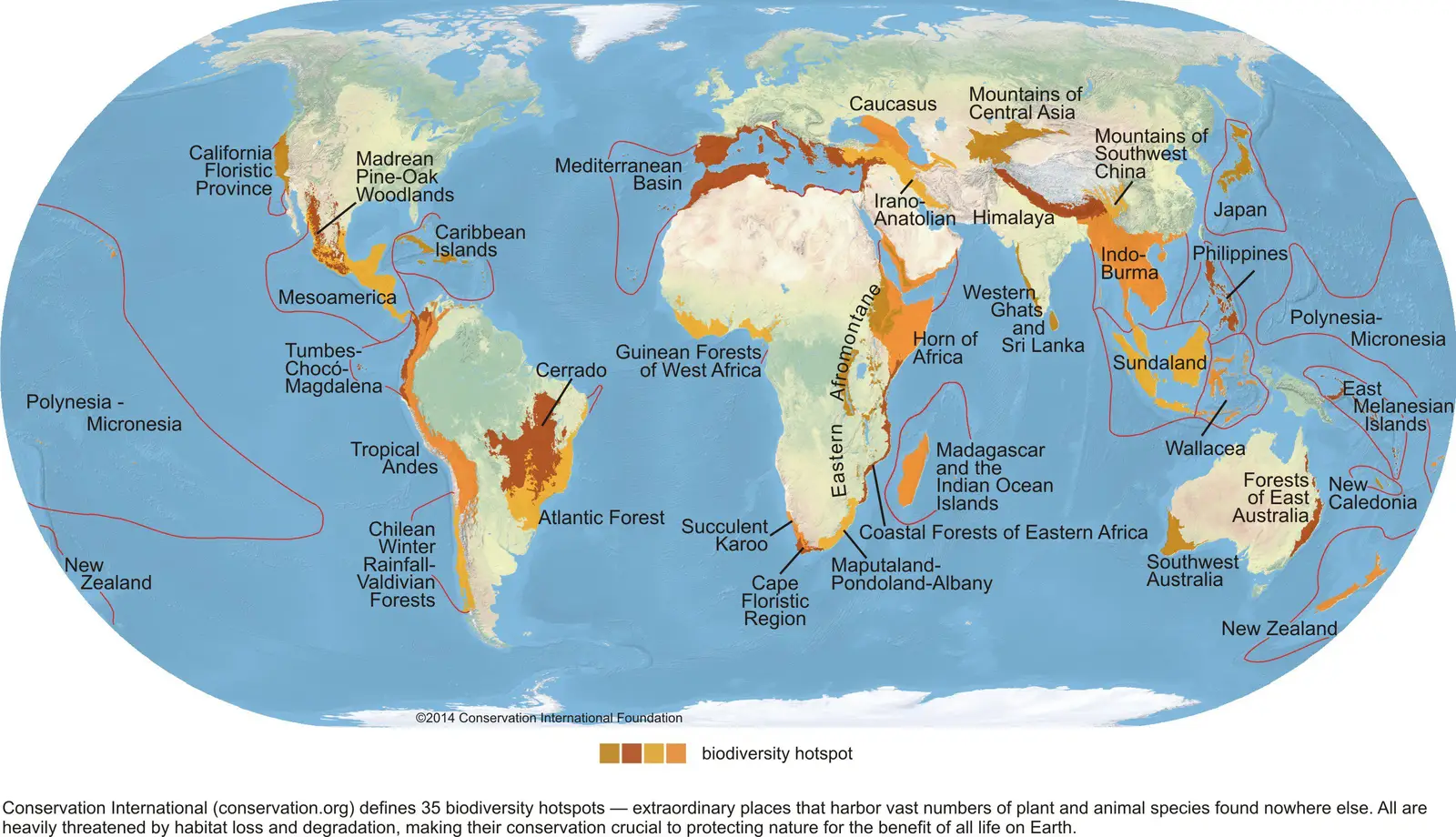
Click or tap the map to enlarge it.
Biodiversity Hotspots Map
Key Takeaways
- The Biodiversity Hotspots Map highlights regions with high levels of biodiversity and significant threats to their ecosystems.
- There are currently 36 designated biodiversity hotspots in the world, covering only 2.4% of the Earth’s land area.
- These hotspots are home to over half of all plant species and nearly 43% of bird, mammal, reptile, and amphibian species.
- Conservation efforts in these areas are crucial for protecting exceptional biological richness and ensuring the survival of numerous species.
- The map serves as a valuable tool for scientists, conservationists, and policymakers to identify priorities for conservation and sustainable development.
History
The concept of biodiversity hotspots was introduced by the renowned British biologist, Norman Myers, in 1988. Myers identified these areas as regions that are exceptionally rich in biodiversity but also highly threatened by human activities.
Over time, further research identified the specific hotspots around the globe based on criteria such as the number of endemic species and the level of habitat loss. In 2000, Conservation International (CI) released the first official map of the 25 biodiversity hotspots.
Since then, the map has evolved, and today it encompasses 36 distinct areas. These hotspots are distributed across various continents, including South America, Africa, Asia, and the Pacific Islands. Each hotspot has its unique ecological characteristics, species diversity, and conservation challenges.
Unique Insights
Exploring the Biodiversity Hotspots Map offers a range of unique insights:
- Importance of Hotspots: The map highlights the importance of these hotspots in maintaining global biodiversity. Despite covering a small fraction of the Earth’s surface, they support an incredibly high concentration of plant and animal species.
- Threats to Hotspots: Most hotspots face severe threats from human activities such as deforestation, habitat fragmentation, climate change, and invasive species. These pressures endanger the survival of numerous species and the ecological balance of the region.
- Collaborative Conservation: The map underscores the need for international cooperation and collaboration in conserving biodiversity hotspots. Protecting these areas requires the efforts of governments, local communities, non-profit organizations, and scientific institutions working together towards sustainable development.
- Ecosystem Services and Benefits: Biodiversity hotspots provide essential ecosystem services, including carbon sequestration, water regulation, and nutrient cycling. Their conservation not only benefits wildlife but also supports human livelihoods and well-being.
- Ecotourism Opportunities: Many biodiversity hotspots attract tourists interested in experiencing the unique wildlife and natural wonders. Sustainable ecotourism can contribute to the local economy while promoting conservation efforts and raising awareness about the importance of protecting these fragile ecosystems.
Facts about Biodiversity Hotspots
| Hotspot | Location | Area (km²) | Number of Endemic Species |
|---|---|---|---|
| Madagascar and the Indian Ocean Islands | Madagascar, Comoros, Seychelles, Mauritius, and Réunion | 147,000 | 12,000+ |
| Mesoamerica | Mexico to Panama | 869,000 | 9,000+ |
| California Floristic Province | California, USA | 163,000 | 2,750+ |
| Cape Floristic Region | South Africa | 90,000 | 9,000+ |
| Mountains of Southwest China | China, Myanmar, and Lao PDR | 475,000 | 10,000+ |
Frequently Asked Questions (FAQ)
1. What is the definition of a biodiversity hotspot?
A biodiversity hotspot is a region with a high concentration of endemic species and facing significant threats to its ecosystems.
2. How many biodiversity hotspots are there in the world?
There are currently 36 designated biodiversity hotspots across the globe.
3. What are the main threats to biodiversity hotspots?
The main threats to biodiversity hotspots include deforestation, habitat destruction, climate change, pollution, and invasive species.
4. Why are biodiversity hotspots important for conservation?
Biodiversity hotspots are important because they contain a significant proportion of the world’s biodiversity. Protecting these areas ensures the survival of numerous species and the maintenance of ecological balance.
5. How are biodiversity hotspots identified?
Biodiversity hotspots are identified based on criteria such as the number of endemic species and the level of habitat loss or degradation.
6. What are some conservation strategies for biodiversity hotspots?
Conservation strategies for biodiversity hotspots include establishing protected areas, implementing sustainable land use practices, raising awareness, and supporting local communities in sustainable livelihoods.
7. Can I visit biodiversity hotspots?
Yes, many biodiversity hotspots offer opportunities for ecotourism. However, it is important to ensure that your visit is conducted in a sustainable and responsible manner to minimize negative impacts on the fragile ecosystems.