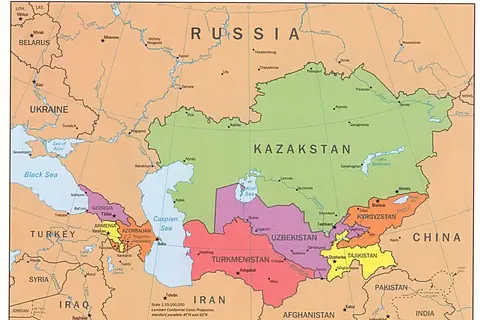
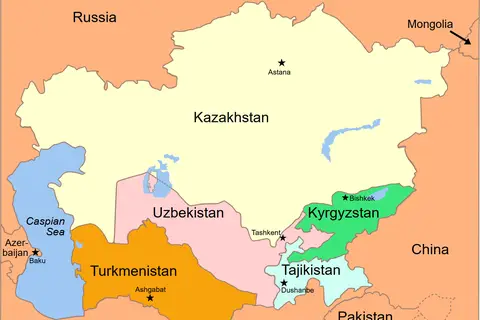
Flag Map of Central Asia
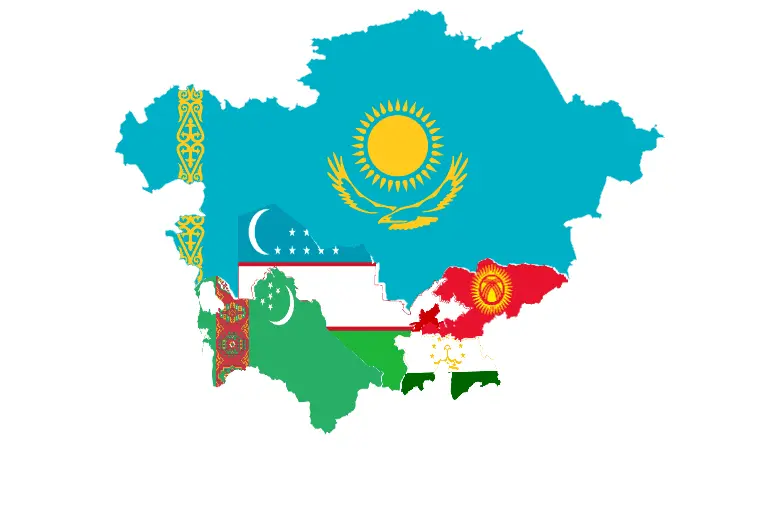
Click or tap the map to enlarge it.
Key Takeaways
- Central Asia is a region rich in cultural heritage and diverse landscapes.
- The Flag Map of Central Asia showcases the national flags of the countries in this region.
- Exploring the map allows for a deeper understanding of the shared histories and cultural identities of these nations.
- Central Asia’s strategic location has influenced trade and cultural exchange for centuries.
- The map provides a visual representation of the geopolitical dynamics in this region.
History
The history of Central Asia dates back to ancient times, with numerous empires rising and falling within its borders. The region has been a crossroads for various civilizations, including the Persians, Greeks, Arabs, Mongols, and more. These influences have shaped the unique cultural identities found in Central Asia today.
The Flag Map of Central Asia showcases the national flags of five countries that form the core of this region: Kazakhstan, Kyrgyzstan, Tajikistan, Turkmenistan, and Uzbekistan. Each flag represents the rich history, traditions, and aspirations of its respective nation.
Unique Insights
Exploring the Flag Map of Central Asia provides several unique insights into the region:
- The prevalence of Islamic symbolism in the flags reflects the predominance of Islam as the primary religion in Central Asia.
- Many of the flags feature vibrant colors and intricate designs that reflect the Central Asian aesthetic.
- The use of symbols such as the sun, stars, and agricultural elements represents the region’s deep connection to nature and traditional livelihoods.
- The location and arrangement of the flags on the map highlight the proximity and boundaries between countries, revealing the complex geopolitical dynamics of Central Asia.
- Central Asian flags often reflect historical connections to neighboring regions and influences from larger empires that once ruled these lands.
Table of Relevant Facts
| Country | Flag Description | Year Adopted |
|---|---|---|
| Kazakhstan | A sky-blue field representing peace and unity, with a golden sun symbolizing wealth and prosperity. | 1992 |
| Kyrgyzstan | A red field with a yellow sun in the center and forty evenly spaced rays representing the forty tribes of Manas. |
1992 |
| Tajikistan | A red field with a stylized crown surmounted by seven stars, representing the Pamir Mountains and the seven regions of Tajikistan. |
1992 |
| Turkmenistan | A green field with a vertical red stripe on the hoist side and five carpet motifs along with two crossed olive branches to form a wreath. |
1992 |
| Uzbekistan | A sky-blue field with a crescent moon and twelve stars symbolizing rebirth and love for freedom. | 1991 |
FAQ
1. What does the Flag Map of Central Asia represent?
The Flag Map of Central Asia represents the national flags of Kazakhstan, Kyrgyzstan, Tajikistan, Turkmenistan, and Uzbekistan.
2. Why are symbols like the sun and stars commonly found on Central Asian flags?
These symbols hold cultural and historical significance, often representing the region’s connection to nature, the Islamic faith, and divine power.
3. When were the flags of these countries adopted?
Kazakhstan, Kyrgyzstan, Tajikistan, Turkmenistan, and Uzbekistan adopted their flags in the early 1990s when they gained independence.
4. How does the Flag Map of Central Asia reflect the region’s cultural diversity?
The different designs, colors, and symbols in the flags represent the unique cultural identities and historical influences of each country.
5. Are there any similarities between the flags?
While each flag is unique, they share common elements such as Islamic symbolism, vibrant colors, and references to nature.
6. Why is Central Asia considered a strategic location?
Central Asia’s location between Europe and East Asia has made it a vital crossroads for trade, cultural exchange, and strategic interests throughout history.
7. Can I explore more maps or resources about Central Asia?
Yes! You can find more detailed maps and resources about Central Asia in the following links: