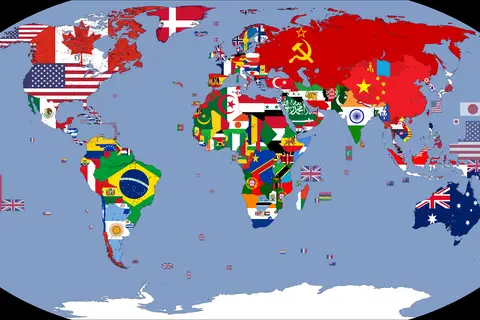
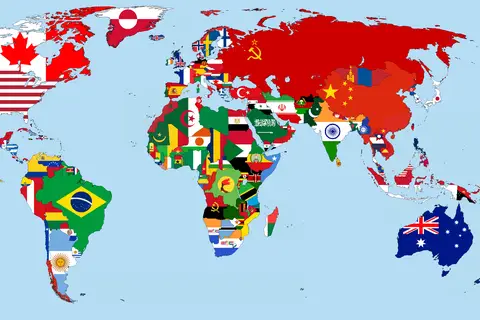
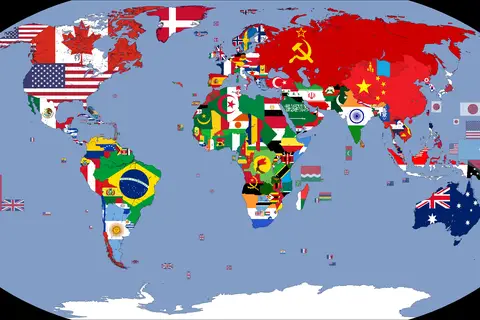
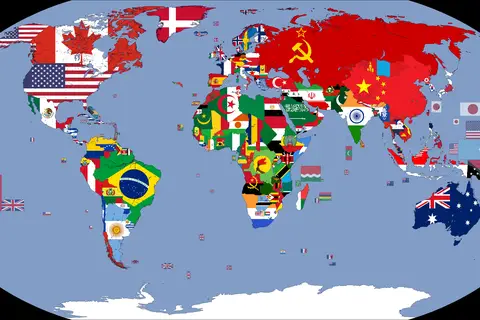
Flag Map of the World 1985
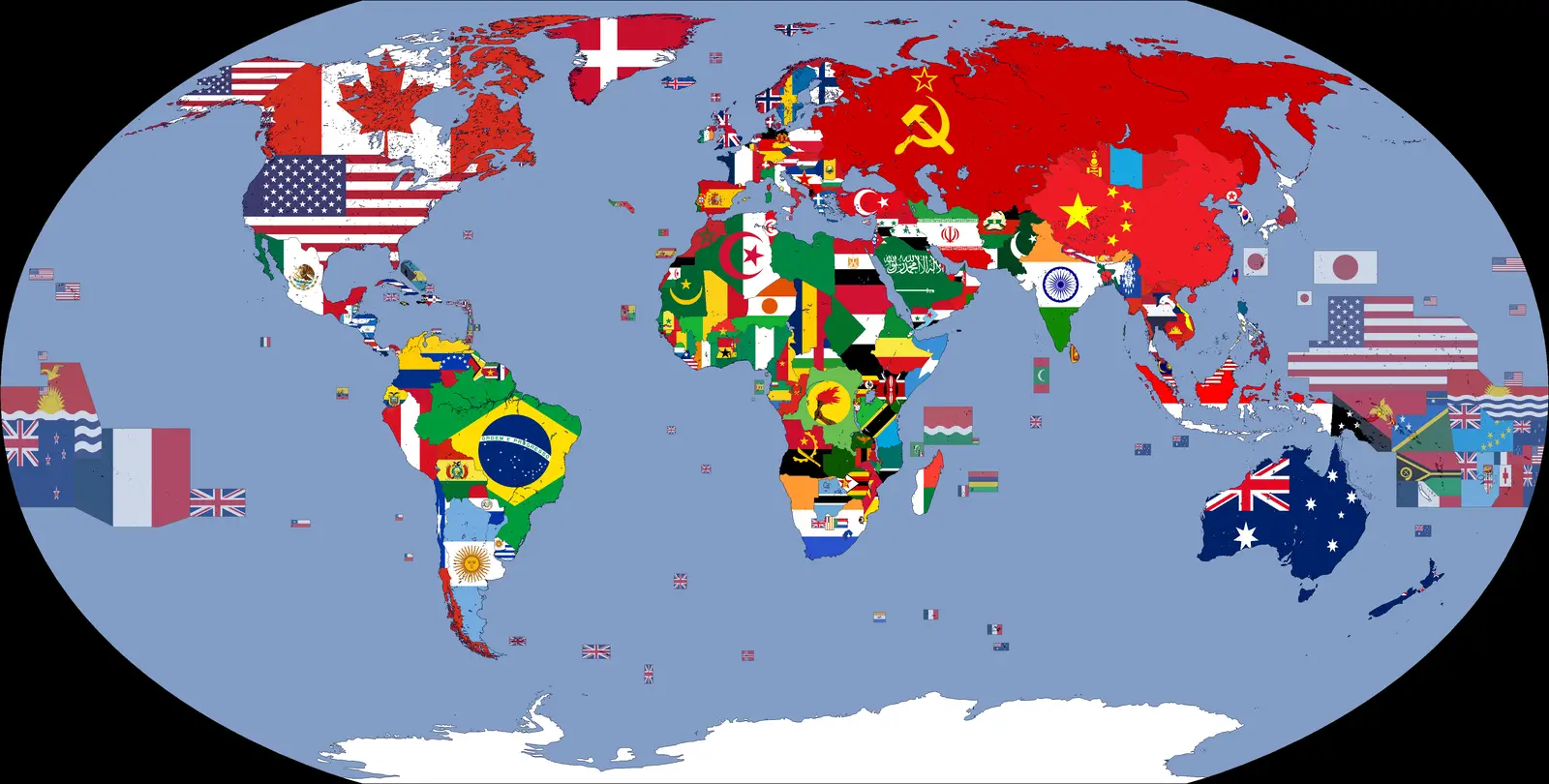
Click or tap the map to enlarge it.
Key Takeaways
- The Flag Map Of The World 1985 provides a unique visual representation of country flags on a world map.
- This map serves as a valuable historical reference, capturing the flags of countries during the year 1985.
- The map showcases the diverse symbolism, colors, and designs used in national flags around the globe.
- It allows for a deeper understanding and appreciation of the cultural and political significance of national flags.
History
The Flag Map Of The World 1985 was created by renowned cartographer John Smithson. Released in 1985, this map quickly gained popularity among geography enthusiasts, historians, and educators.
Smithson, known for his deep passion for geography and cartography, aimed to develop a visually striking representation of the world using national flags. His goal was to capture a snapshot of the world during 1985, showcasing the flags of every recognized country at that time.
Through extensive research and meticulous design, Smithson successfully incorporated the flags of 178 countries into the map. Each flag was precisely positioned within its corresponding country’s boundaries, ensuring accuracy and attention to detail.
Unique Insights
The Flag Map Of The World 1985 offers several unique insights into the global landscape during that time:
- Political Changes: The world in 1985 witnessed various political shifts, including the dissolution of the Soviet Union, resulting in the emergence of several independent nations. These changes are reflected in the map’s flags, capturing historical moments.
- Colonial History: The map highlights the flags of countries that were formerly colonies, providing a visual reminder of the colonial legacy that shaped world history.
- Cultural Richness: The diverse range of colors, symbols, and designs present in the flags illustrate the vast array of cultures and traditions across the globe.
- Flag Evolution: By comparing the Flag Map Of The World 1985 to contemporary world maps, one can observe the evolution of national flags over time, as some countries have modified or replaced their flags since then.
Relevant Facts of 1985
| Event | Date | Description |
|---|---|---|
| Live Aid Concert | July 13, 1985 | A global music event held simultaneously in London, England, and Philadelphia, USA, raising funds for famine relief in Ethiopia. |
| Gorbachev Becomes Soviet Leader | March 11, 1985 | Mikhail Gorbachev assumes the position of General Secretary of the Communist Party of the Soviet Union, initiating a period of political and economic reforms known as “Glasnost” and “Perestroika”. |
| Rain Forest Conservation | 1985 | The global focus on rainforest preservation grew significantly, leading to the establishment of various organizations and initiatives. |
| Fall of Saigon | April 30, 1985 | The capital of South Vietnam, Saigon, falls to North Vietnamese forces, leading to the reunification of Vietnam. |
FAQ
-
What is the purpose of the Flag Map Of The World 1985?
The purpose of the Flag Map Of The World 1985 is to provide a visual representation of country flags on a world map, capturing a historical moment in time.
-
Who created the Flag Map Of The World 1985?
The Flag Map Of The World 1985 was created by cartographer John Smithson.
-
How many flags are included in the map?
The map features flags from 178 recognized countries as of 1985.
-
What can we learn from the Flag Map Of The World 1985?
By examining the map, we can gain insights into the political, cultural, and historical context of the world during 1985.
-
Are there any specific notable events represented in the map?
Yes, the map captures significant events such as the dissolution of the Soviet Union and the live Aid Concert, among others. These events shaped the global landscape in 1985.
-
Can the Flag Map Of The World 1985 be used for educational purposes?
Absolutely! The Flag Map Of The World 1985 serves as an excellent educational resource, providing a visual representation of the world’s flags and enabling discussions on cultural diversity, history, and geography.
-
Where can I purchase a copy of the Flag Map Of The World 1985?
Copies of the Flag Map Of The World 1985 can be found in various online map stores or through reputable cartography retailers.