Greater Manila Area Map Including Provinces Cities and Municipalities
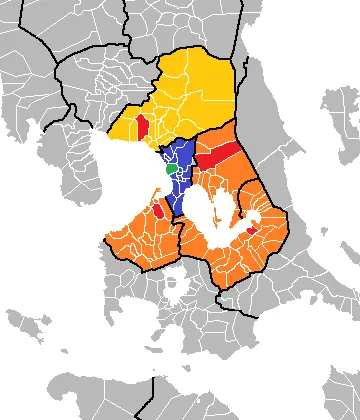
Click or tap the map to enlarge it.
Key Takeaways
- The Greater Manila Area is a highly urbanized and densely populated region in the Philippines.
- This map includes the provinces, cities, and municipalities in and around Manila.
- It is essential for tourists, travelers, and locals to have a detailed map to navigate the area effectively.
- Knowing the administrative divisions and locations within the Greater Manila Area is important for planning trips and understanding the region’s geography.
History
The Greater Manila Area, also known as Metro Manila or the National Capital Region (NCR), is the political, economic, and cultural center of the Philippines. It is located on the island of Luzon and consists of 16 highly urbanized cities and one municipality. The area has a rich history that dates back to pre-colonial times.
During the Spanish colonial period, Manila, the capital city, became a significant trading hub in Southeast Asia. It was under Spanish rule until the end of the 19th century when the Philippines gained independence from Spain. Manila continued to grow and develop during the American period and became the capital of the newly established Philippine Commonwealth and later the Republic of the Philippines.
Today, the Greater Manila Area is a bustling metropolis with a population of over 12 million, making it one of the most densely populated regions in the world. It plays a critical role in the country’s economy, housing various industries, government offices, educational institutions, and cultural landmarks.
Unique Insights
- The Greater Manila Area serves as the gateway to other parts of the Philippines, making it a popular entry point for international visitors.
- It is home to numerous historical and cultural landmarks, such as Intramuros, Rizal Park, and the National Museum of the Philippines.
- The region offers a diverse culinary scene, showcasing both traditional Filipino dishes and international cuisines.
- Various festivals and events are held throughout the year, providing visitors with unique cultural experiences.
- The Greater Manila Area is also known for its vibrant nightlife, with entertainment districts offering a wide range of bars, clubs, and live music venues.
Relevant Facts
| Year | Event |
|---|---|
| 1571 | The city of Manila was established by Spanish conquistador Miguel López de Legazpi. |
| 1945 | Manila was heavily damaged during the Battle of Manila in World War II. |
| 1976 | Makati City was declared a highly urbanized city, becoming one of the major financial centers in Asia. |
| 1990 | The Greater Manila Area was officially designated as the National Capital Region (NCR). |
| 2013 | Manila hosted the 27th Southeast Asian Games. |
FAQ
1. What are the provinces included in the Greater Manila Area?
The provinces included in the Greater Manila Area are Bulacan, Cavite, Laguna, and Rizal.
2. How many cities are part of the Greater Manila Area?
The Greater Manila Area consists of 16 highly urbanized cities. These include Manila, Quezon City, Makati, Pasig, Taguig, and more.
3. What is the population of the Greater Manila Area?
The Greater Manila Area has a population of over 12 million people.
4. Which landmarks are must-visit in the area?
Some must-visit landmarks in the Greater Manila Area include Intramuros, Rizal Park, Fort Santiago, and the National Museum of the Philippines.
5. What is the best mode of transportation within the Greater Manila Area?
The Greater Manila Area has an extensive transportation network, including buses, trains, taxis, and ride-sharing services like Grab. The Metro Rail Transit (MRT) and Light Rail Transit (LRT) systems are popular for traveling within the area.
6. Are there any nearby beaches in the Greater Manila Area?
Yes, there are several popular beach destinations near the Greater Manila Area, including Batangas and Subic Bay in Zambales.
7. What is the climate like in the Greater Manila Area?
The Greater Manila Area experiences a tropical climate with two distinct seasons, the wet season (June to November) and the dry season (December to May). Temperatures are generally highest in April and May.