Map of Diplomatic Missions of Usa
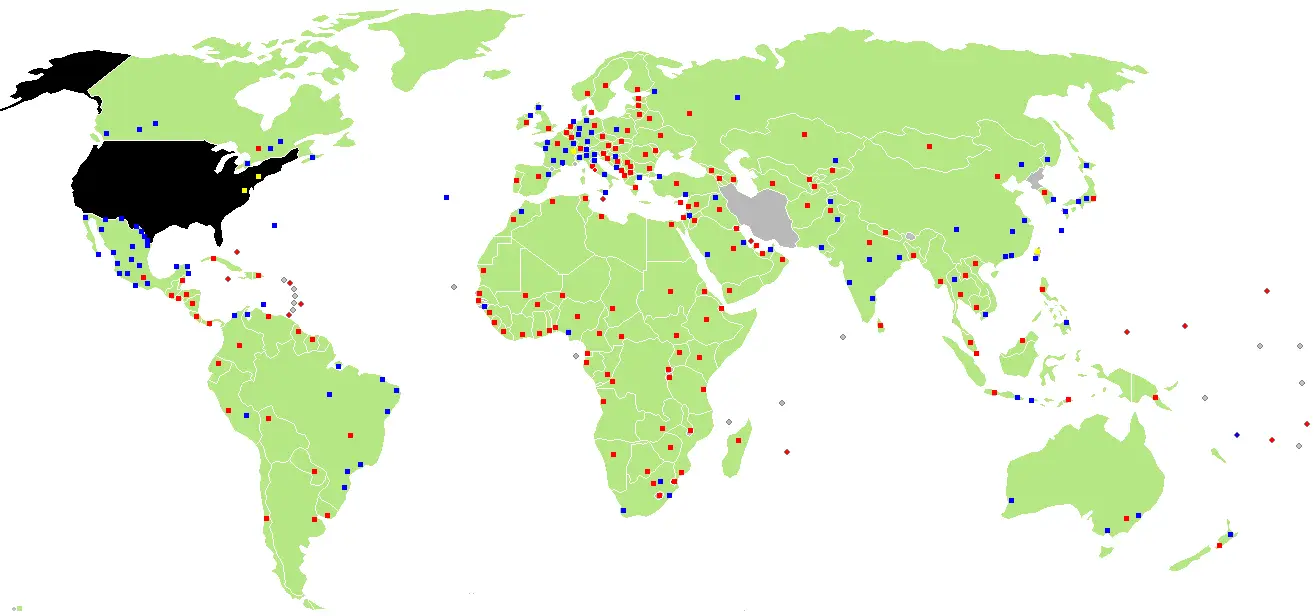
Click or tap the map to enlarge it.
Key Takeaways
- The Map of Diplomatic Missions of USA showcases the global presence of United States diplomatic and consular missions.
- This map is a valuable resource for understanding the diplomatic relationships and international engagements of the United States.
- The United States maintains embassies, consulates, and other diplomatic missions in strategic locations across the world.
- Each diplomatic mission serves as a crucial hub for promoting political, economic, and cultural interests between the United States and host countries.
History
The history of diplomatic missions of the United States dates back to the early days of the country’s independence. As the United States grew in global influence, the need for establishing diplomatic representations in foreign lands became evident.
The first recognized U.S. overseas diplomatic mission was the U.S. Legation in the Netherlands, established in 1782. Since then, the diplomatic presence of the United States expanded rapidly, following the principles of diplomatic engagement and international cooperation.
Over the years, the United States established embassies, consulates, and other diplomatic missions in strategic locations worldwide. Today, the United States maintains a vast network of diplomatic missions to facilitate close relationships with nations around the globe.
Unique Insights
1. Global Reach: The map of diplomatic missions of the USA highlights the extensive reach of American diplomacy, showcasing the presence of U.S. embassies and consulates in various continents, including North America, South America, Europe, Asia, Africa, and Oceania.
2. Importance of Diplomatic Relations: The establishment of diplomatic missions signifies the importance of building strong relationships between the United States and other countries. It serves as a platform for dialogue, negotiation, and cooperation on political, economic, and cultural fronts.
3. Economic Significance: The diplomatic missions often play a vital role in promoting trade and investment opportunities between the United States and host countries. They facilitate economic partnerships and foster business relationships, leading to economic growth and prosperity.
4. Consular Services: Diplomatic missions provide consular services to the citizens of the United States living or traveling abroad. These services include issuing passports, providing assistance during emergencies, and offering consular support to U.S. citizens in need.
5. Cultural Exchange: Diplomatic missions engage in cultural exchange programs, promoting mutual understanding and appreciation of diverse cultures. They organize events, exhibitions, and educational initiatives to foster cultural ties between the United States and host countries.
Table: Relevant Facts
| Year | Event |
|---|---|
| 1782 | Establishment of the first recognized U.S. overseas diplomatic mission – U.S. Legation in the Netherlands. |
| 1945 | The United States becomes a founding member of the United Nations, further strengthening its global diplomatic engagement. |
| 1961 | Opening of the U.S. Embassy in Moscow, Russia, during the height of the Cold War. |
| 1994 | Normalization of diplomatic relations between the United States and Vietnam. |
| 2015 | Reopening of the U.S. Embassy in Havana, Cuba, marking a historic step towards improved relations between the two nations. |
FAQ
1. How many overseas diplomatic missions does the United States have?
The United States has diplomatic missions in nearly every country, with over 270 embassies, consulates, and other diplomatic representations worldwide.
2. What is the purpose of a diplomatic mission?
The primary purpose of a diplomatic mission is to represent the sending country’s interests and foster diplomatic relationships with the host country. It serves as a hub for political, economic, and cultural interactions between nations.
3. How do diplomatic missions contribute to international cooperation?
Diplomatic missions facilitate international cooperation by promoting dialogue, negotiation, and collaboration between countries. They serve as channels for resolving disputes, addressing global challenges, and strengthening bilateral and multilateral relationships.
4. What services are provided by U.S. consulates?
U.S. consulates provide consular services to U.S. citizens abroad, including passport issuance, visa processing, assistance during emergencies, and support for American citizens in need.
5. How do diplomatic missions promote economic relations?
Diplomatic missions play a crucial role in promoting economic relations by facilitating trade and investment opportunities. They organize business forums, trade missions, and provide support to businesses seeking international partnerships.
6. How are diplomatic missions involved in cultural exchange?
Diplomatic missions actively engage in cultural exchange initiatives, such as organizing cultural events, exhibitions, and educational programs. These activities promote mutual understanding, appreciation of diverse cultures, and dialogue between societies.
7. How often do diplomatic missions change locations?
Diplomatic missions may change locations due to various reasons, including security concerns, policy shifts, or evolving diplomatic priorities. Relocations are determined by the respective governments based on strategic considerations.