Map of Isle Royale National Park
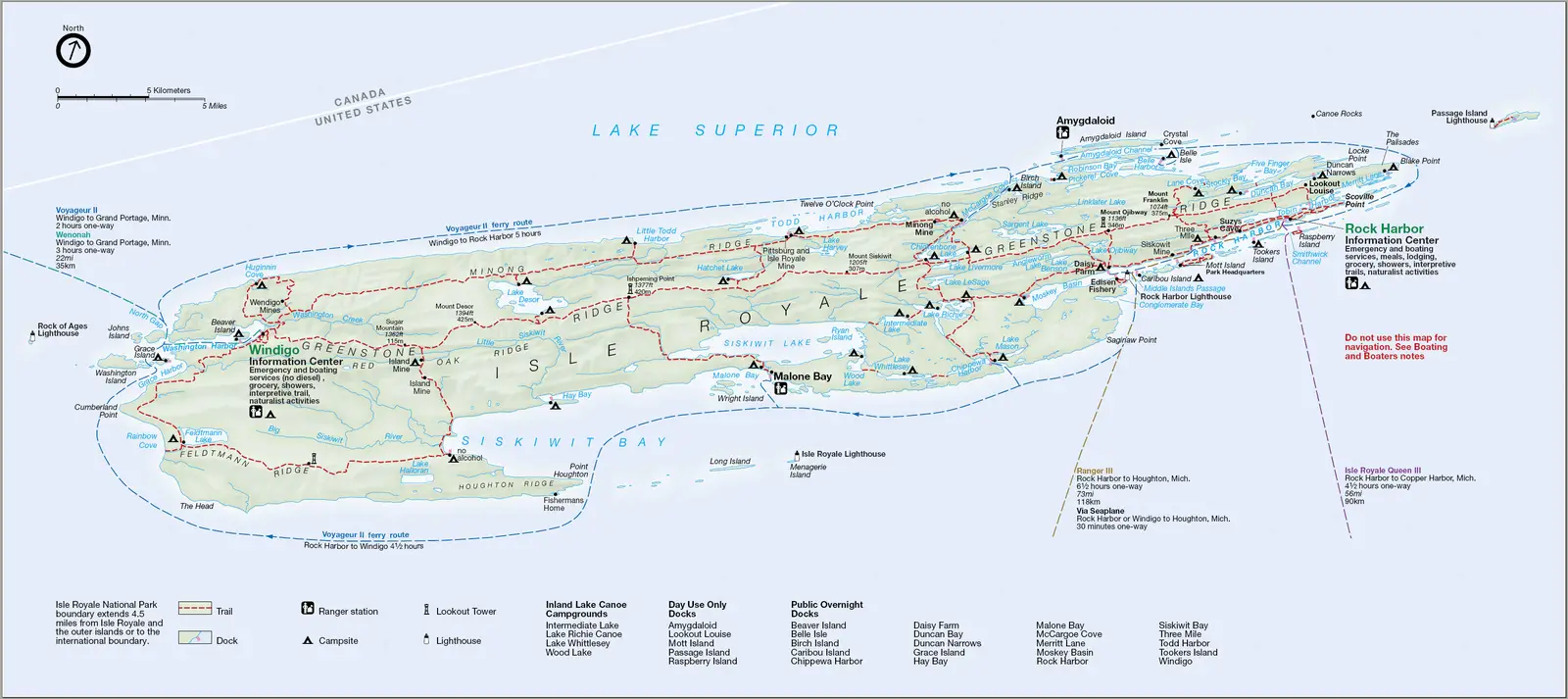
Click or tap the map to enlarge it.
Key Takeaways
- Isle Royale National Park is located in Lake Superior and is the largest island in the lake.
- The park is known for its rugged wilderness, stunning landscapes, and diverse wildlife.
- Isle Royale offers a range of recreational activities such as hiking, camping, fishing, and boating.
- The park is a designated UNESCO International Biosphere Reserve.
- Visitors can explore the island’s numerous trails that offer breathtaking views and opportunities to spot moose,
wolves, and other wildlife. - Isle Royale National Park is a remote and pristine destination, providing a unique experience in the Great Lakes
region.
History of Isle Royale National Park
Isle Royale National Park is rich in history, with evidence of human presence dating back thousands of years. The
island has a significant cultural and geological heritage.
The park is believed to have been inhabited by Native Americans from at least 4,500 years ago. The indigenous
people, including the Ojibwa and Chippewa tribes, revered the island and considered it a sacred place.
European explorers and fur traders arrived in the region in the 17th century. In the mid-1800s, Isle Royale
experienced a mining boom, attracting prospectors in search of copper and other minerals. However, in the early
20th century, the mining activity declined, leaving behind remnants of the island’s industrial past.
The establishment of Isle Royale National Park came in 1940, and it was designated a national park to preserve and
protect its unique natural and cultural features. Today, the park continues to draw nature enthusiasts,
researchers, and adventurers from around the world.
Unique Insights about Isle Royale National Park
Exploring Isle Royale National Park reveals several unique insights into its natural wonders and significance:
- Isle Royale National Park is home to one of the world’s longest-running predator-prey studies. Researchers
have been studying the interactions between the island’s wolf and moose populations for more than six
decades, offering valuable insights into the dynamics of predator-prey relationships. - The park’s isolation from the mainland has allowed for the development of unique flora and fauna. Many species
found on Isle Royale cannot be found anywhere else in the region. - Isle Royale’s geology is characterized by rugged cliffs, beautiful shorelines, and inland lakes. The greenstone
rock formations are particularly notable and attract geology enthusiasts from all over. - The park’s remote location and limited public access contribute to its pristine and undisturbed natural
environment. Visitors can experience true solitude and wilderness as they explore the trails and waterways
of the island.
Table of Relevant Facts
| Year | Event |
|---|---|
| 1940 | Isle Royale is designated as a national park. |
| 1983 | Isle Royale National Park is designated as a UNESCO International Biosphere Reserve. |
| 2018 | The last remaining mainland population of wolves in Michigan goes extinct. |
| 2019 | The National Park Service announces the introduction of new wolves to Isle Royale to restore the predator-prey balance. |
Frequently Asked Questions (FAQ)
-
Where is Isle Royale National Park located?
Isle Royale National Park is located in Lake Superior, approximately 15 miles off the coast of Michigan’s
Upper Peninsula. -
What are the recreational activities available in the park?
Visitors to Isle Royale National Park can enjoy activities such as hiking, camping, fishing, canoeing,
kayaking, and wildlife-watching. -
Can I bring my own boat to the park?
Yes, private boats are allowed in Isle Royale National Park. However, there are regulations and guidelines
to follow, including obtaining a boating permit. -
What wildlife can be found on Isle Royale?
The park is home to a variety of wildlife, including moose, wolves, beavers, otters, foxes, and numerous
bird species. The wolf and moose populations are particularly notable. -
Is camping available on the island?
Yes, camping is allowed in designated campgrounds and inland lakeshores within Isle Royale National
Park. Permits are required for overnight stays. -
Are there any guided tours available in the park?
While there are no official guided tours, the park offers ranger-led programs and presentations during the
summer season to enhance visitors’ understanding of the island’s natural and cultural heritage. -
Can I visit Isle Royale National Park during winter?
Winter visitation to the park is limited due to the harsh weather conditions. However, enthusiasts can
explore the island by cross-country skiing and snowshoeing.