Map of the Kushan Empire
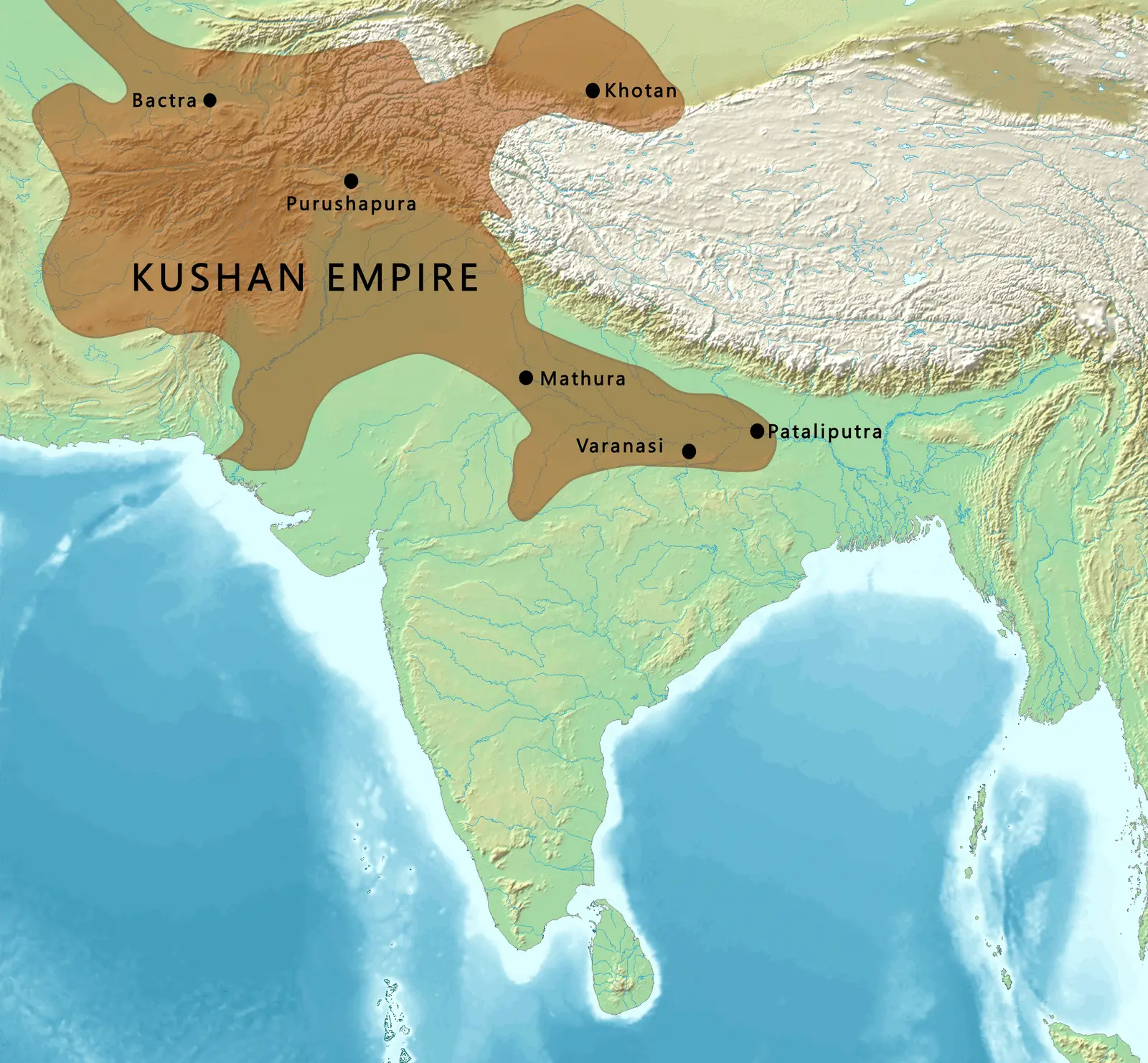
Click or tap the map to enlarge it.
Map of the Kushan Empire – A Fascinating Explore into Ancient History
Key Takeaways
- The Kushan Empire was a powerful ancient empire that existed from the 1st to 3rd centuries CE.
- They ruled over a vast territory spanning modern-day Central Asia, India, and parts of China.
- The Kushan Empire played a significant role in connecting the East and West through the Silk Road.
- The empire was home to diverse cultures, religions, and artistic influences.
- The map of the Kushan Empire allows us to visualize the extent of their political and cultural influence.
History
The Kushan Empire, also known as the Kushano-Sasanian Kingdom, was a fascinating ancient empire that existed from the 1st to 3rd centuries CE. This empire was founded by the nomadic Yuezhi people in present-day Uzbekistan and expanded its influence across a vast territory, encompassing regions of Central Asia, northern India, and parts of China. The Kushan Empire reached its peak during the reign of Kanishka the Great.
One of the greatest contributions of the Kushan Empire was its role in facilitating trade and cultural exchange between regions of the East and West. The empire became a key player in the Silk Road, which was a network of trade routes connecting Asia, the Mediterranean, and Europe. This helped to foster economic growth, spread ideas and knowledge, and influence various artistic styles.
The Kushan Empire was a melting pot of different cultures and religions. The ruling elite adopted Greek and Persian administrative practices, while the local population practiced a mix of Zoroastrianism, Hinduism, Buddhism, and later, even early forms of Mahayana Buddhism. This cultural diversity and religious tolerance allowed for the flourishing of art, architecture, and literature.
Unique Insights
Studying the map of the Kushan Empire provides unique insights into the political and cultural landscape of the time:
- The Kushan Empire had a centralized administration with several major cities serving as regional capitals.
- The empire’s borders fluctuated over time due to conflicts with neighboring powers.
- The Kushan Empire’s influence extended as far east as modern-day China.
- The empire was known for its rich mineral resources and trade in precious stones and metals.
- The map showcases the interconnectedness of different regions and cultures within the empire.
- A significant portion of the empire’s wealth came from controlling key trade routes, particularly the Silk Road.
- The Kushan Empire served as a bridge between the Eastern and Western worlds, facilitating cultural exchange.
- The map also reveals the diversity of architectural styles and artistic influences within the empire.
Table of Relevant Facts
| Year | Event |
|---|---|
| 30 CE | The Kushan Empire is founded by the Yuezhi people in Central Asia. |
| 1st century CE | The empire expands its influence into India. |
| 2nd century CE | Kushan Empire reaches its peak under the rule of Kanishka the Great. |
| 3rd century CE | The empire declines and faces invasions from neighboring powers. |
| 4th century CE | The Kushan Empire is effectively conquered by the Sassanian Persians. |
Frequently Asked Questions (FAQ)
1. What was the extent of the Kushan Empire?
The Kushan Empire encompassed vast territories, including modern-day Tajikistan, Uzbekistan, Afghanistan, Pakistan, and parts of northern India and China.
2. Which civilizations influenced the Kushan Empire?
The Kushan Empire was influenced by Hellenistic Greek, Persian, Indian, and Chinese civilizations, leading to a unique blend of cultures.
3. What role did the Kushan Empire play in trade?
The Kushan Empire played a crucial role in facilitating trade and connecting the East and West through the Silk Road, fostering economic growth and cultural exchange.
4. What were the main religions practiced in the Kushan Empire?
Zoroastrianism, Hinduism, Buddhism, and even early forms of Mahayana Buddhism were practiced within the Kushan Empire.
5. Who were some notable rulers of the Kushan Empire?
Notable rulers include Kujula Kadphises, Vima Takto, and Kanishka the Great.
6. What caused the decline of the Kushan Empire?
The Kushan Empire faced invasions from neighboring powers, internal conflicts, and economic challenges, resulting in its decline.
7. What is the significance of the Kushan Empire today?
The Kushan Empire left a lasting impact on the art, culture, and trade routes of the ancient world, contributing to the formation of various civilizations.