Mapa Grecia Antigua
Key Takeaways
- Greece is known for its rich history and influential ancient civilization.
- The Mapa Grecia Antigua provides an insight into the geography and landmarks of Ancient Greece.
- Exploring this map allows you to discover the significant cities, regions, and historical sites that shaped the ancient world.
- Understanding the geography of Ancient Greece helps us comprehend the cultural and political developments of that era.
History of Ancient Greece
Ancient Greece was a highly advanced civilization that flourished from the 8th century BCE until the conquest by the Roman Empire in 146 BCE. Renowned for its contributions to philosophy, literature, art, and democracy, Ancient Greece laid the foundation for Western civilization.
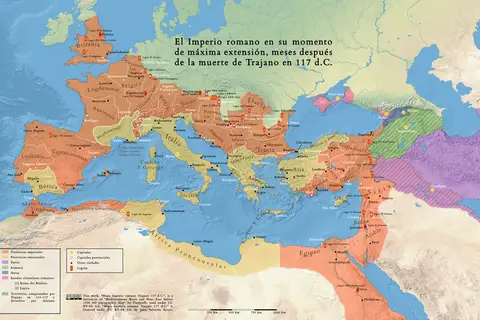
The Mapa Grecia Antigua is a representation of this historical period, showcasing the various city-states, trade routes, and landmarks that marked the glorious past of the Greek mainland and its surrounding islands.
Unique Insights from the Map
The Mapa Grecia Antigua offers several unique insights into Ancient Greece:
- The geographical diversity of the Greek mainland and its islands played a crucial role in shaping the distinctive city-states and cultural identities.
- Athens, the birthplace of democracy, is prominently featured on the map, reflecting its significant political and intellectual influence during that time.
- The map highlights important historical sites, such as the Acropolis of Athens, Delphi’s Oracle, and Olympia’s ancient stadium, which hosted the inaugural Olympic Games.
- It portrays the major trade routes that connected Ancient Greece to other civilizations, emphasizing its position as a Mediterranean hub of commerce and cultural exchange.
Table of Relevant Facts
| Event | Date | Significance |
|---|---|---|
| Athens becomes a democracy | 508 BCE | Athens establishes a new form of government that gives power to its citizens, laying the foundations for modern democracy. |
| Persian Wars | 500-449 BCE | Greek city-states unite to defend against Persian invasions, resulting in a pivotal victory for Greece and solidifying its dominance in the region. |
| Alexander the Great’s Conquests | 336-323 BCE | Alexander the Great leads the Macedonian Empire to expand rapidly, spreading Greek culture and influence across an extensive territory. |
| Hellenistic Period | 323-31 BCE | After Alexander’s death, the Hellenistic period emerges, blending Greek and Eastern cultures, resulting in advances in science, philosophy, and art. |
Frequently Asked Questions (FAQ)
1. What were the major city-states in Ancient Greece?
The major city-states in Ancient Greece were Athens, Sparta, Corinth, Thebes, and Delphi.
2. How did geography influence the development of Ancient Greece?
The geography of Greece, with its mountainous terrain and many islands, led to the formation of independent city-states, each with its own government, laws, and cultural practices.
3. What is the significance of the Acropolis of Athens?
The Acropolis of Athens is a hilltop citadel that served as the religious and cultural center of Ancient Athens. It houses iconic structures like the Parthenon and symbolizes the achievements and power of Ancient Greece.
4. What were the main trade routes of Ancient Greece?
The main trade routes of Ancient Greece included the Mediterranean Sea routes, connecting with North Africa, Egypt, and the Eastern Mediterranean, and the Black Sea routes, reaching regions like Asia Minor.
5. What impact did Ancient Greece have on modern civilization?
Ancient Greece’s contributions to philosophy, democracy, literature, and art have had a profound and lasting impact on modern civilization, shaping our political systems, moral values, literature, and artistic expressions.
6. Were all city-states in Ancient Greece democracies?
No, not all city-states in Ancient Greece were democracies. While Athens was known for its democracy, other city-states like Sparta had different forms of government, such as oligarchy.
7. How did Ancient Greece decline?
Ancient Greece began to decline after various factors, including conquest by the Roman Empire, internal wars, and social unrest, weakened its city-states and shattered its unity.