Mongol Empire Map
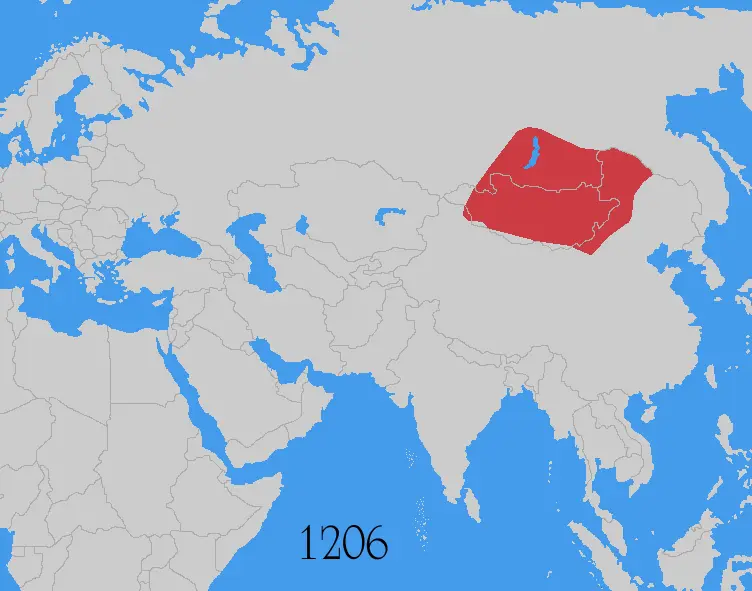
Click or tap the map to enlarge it.
Key Takeaways
- The Mongol Empire was the largest contiguous empire in history, spanning from Eastern Europe to Asia.
- It was founded by Genghis Khan in 1206 and expanded rapidly under his successors.
- The empire had a significant impact on trade, communication, and cultural exchanges between East and West.
- Mapping the Mongol Empire provides insights into its vast territorial extent and the routes of its conquests.
- The empire’s dissolution eventually led to the emergence of distinct regional powers.
History: The Mongol Empire Map
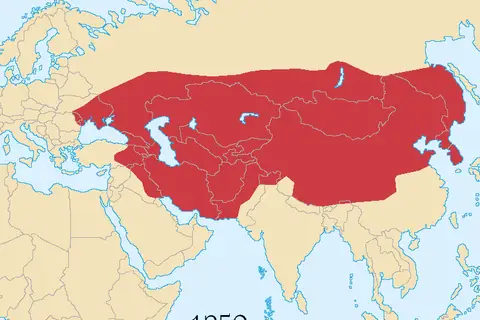
The Mongol Empire, founded by Genghis Khan in 1206, was one of the most formidable forces in world history. At its peak, it encompassed an unparalleled expanse of territory, stretching from Eastern Europe to Asia. To understand the geographic extent and impact of this empire, cartographers have meticulously mapped its vast dominions.
Early Conquests
Under Genghis Khan’s leadership, the Mongols began their expansion and swiftly conquered neighboring territories. By the time of his death in 1227, the empire had already gained control over vast regions, including modern-day Mongolia, China, and parts of Central Asia. These early conquests laid the foundation for the empire’s future growth.
Kublai Khan and the Yuan Dynasty
Genghis Khan’s successors continued to expand the empire, with Kublai Khan being one of the most influential rulers. He established the Yuan Dynasty in China, which marked a significant turning point in Mongol history. Kublai Khan’s reign saw increased cultural exchanges between East and West, facilitated by the empire’s extensive network of trade routes, such as the Silk Road.
Mapping the Mongol Empire
Mapping the Mongol Empire provides a visual representation of the empire’s territorial extent and the paths of its conquests. These maps showcase the empire’s reach from Europe to Asia, highlighting the cities, regions, and trade routes that flourished under Mongol rule. The accuracy and detail of these maps offer invaluable insights into the empire’s geographical impact.
Unique Insights from the Mongol Empire Map
Studying the Mongol Empire map unveils several unique insights:
- The empire’s territorial extent was unparalleled, spanning over 22% of the world’s landmass.
- Trade flourished along the Silk Road, connecting Europe and Asia and facilitating cultural exchange.
- Key cities within the empire, such as Karakorum and Samarkand, became important centers of commerce and culture.
- The Mongol Empire’s rapid conquests disrupted existing political structures and reshaped regional dynamics.
- Detailed maps enable us to trace the evolution and decline of the empire, as it fragmented into distinct Khanates.
Table: Relevant Facts about the Mongol Empire
| Year | Event |
|---|---|
| 1206 | Founding of the Mongol Empire by Genghis Khan |
| 1227 | Death of Genghis Khan |
| 1279 | Establishment of the Yuan Dynasty |
| 1294 | Death of Kublai Khan |
| 1368 | The end of Mongol rule in China |
Frequently Asked Questions (FAQ)
1. How did the Mongol Empire compare in size to other empires?
The Mongol Empire was the largest contiguous empire in history, surpassing the size of other notable empires such as the British Empire and the Roman Empire.
2. Did the Mongol Empire have a significant impact on trade?
Yes, the Mongol Empire played a crucial role in facilitating trade and cultural exchange along the Silk Road. This vast network of trade routes connected East and West, fostering economic growth and cross-cultural interactions.
3. What were the major cities within the Mongol Empire?
Key cities within the Mongol Empire included Karakorum, the empire’s capital, and Samarkand, a vital center of trade and culture.
4. How did the Mongol Empire decline?
The Mongol Empire began to decline after the death of Kublai Khan, as internal conflicts and the emergence of regional powers led to its fragmentation into separate Khanates.
5. What were the cultural exchanges facilitated by the Mongol Empire?
The Mongol Empire fostered cultural exchanges between East and West, resulting in the transmission of knowledge, technologies, and artistic techniques. This cross-cultural pollination paved the way for future developments.
6. What impact did the Mongol Empire have on regional dynamics?
The Mongol Empire’s rapid conquests disrupted existing political structures and reshaped regional dynamics. It led to the emergence of new powers and assisted in the rise of subsequent empires.
7. What can maps of the Mongol Empire teach us?
Maps of the Mongol Empire unveil its vast territorial extent, the routes of its conquests, and the cities and regions that thrived under Mongol rule. They provide valuable insights into the empire’s historical significance and its impact on trade, communication, and cultural exchanges.