Nazi Map: Spreading of the Jews in Germany and Europe
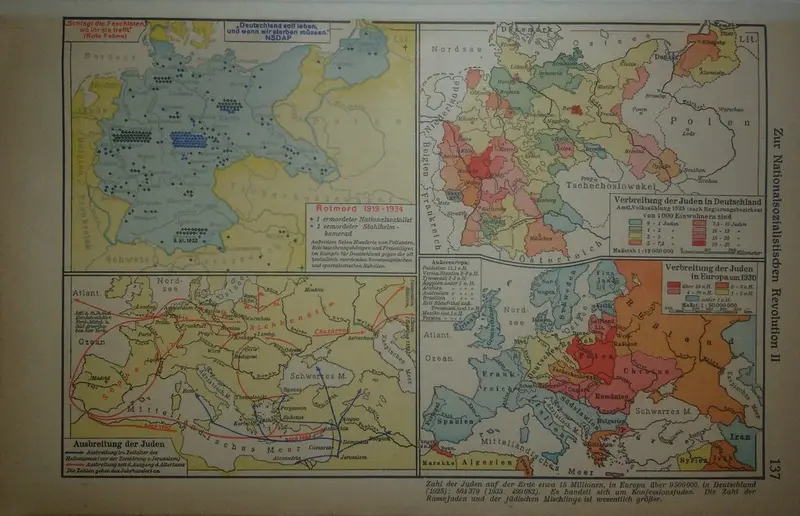
Click or tap the map to enlarge it.
Nazi Map: Spreading of the Jews in Germany and Europe
Introduction: The Infamous Nazi Map and the Persecution of Jews in Germany and Europe
During the dark years of World War II, the Nazi regime in Germany orchestrated the systematic persecution and elimination of Jews across Europe. As part of their malevolent campaign, the Nazis created a sinister map known as the “Nazi Map.” This map aimed to spread hate and anti-Semitism by geographically illustrating their plan to relocate large populations of Jews from Germany and other European countries.
The Nazi Map served as a sinister tool to instill fear, hatred, and dehumanization, contributing to the genocide of six million Jews during the Holocaust. This article aims to explore the purpose and creation of the Nazi Map, the forced relocation of Jews as depicted on the map, the impact it had on the Jewish population, the reaction it generated, and the importance of remembering this dark era in history.
By examining the Nazis’ strategy and studying the events surrounding the Nazi Map, it becomes evident how propaganda and systematic planning were used to execute their genocidal plans, targeting innocent individuals solely based on their Jewish heritage.
The Purpose and Creation of the Nazi Map: Spreading Hatred and Anti-Semitism
The creation of the Nazi Map was not an isolated event but rather a part of the larger Nazi propaganda machinery. Hitler and his supporters sought to cultivate a climate of anti-Semitism that justified their discriminatory policies and eventually led to the full-scale implementation of the Holocaust.
The purpose of the Nazi Map was twofold: firstly, it aimed to demonstrate the perceived “Jewish problem” and present a tangible solution to the German population. The map depicted a proposed spread of Jewish settlements throughout Germany, making the Jewish population visible to the German public and emphasizing their alleged infiltration into the fabric of society.
Secondly, the Nazi Map was designed to ignite anti-Semitic sentiments and guide the Nazis’ efforts to segregate and isolate Jewish communities. The map portrayed the forced relocation of Jews, highlighting the areas where they were to be concentrated, facilitating the Nazis’ control over their perceived enemies.
The creation of the Nazi Map required meticulous planning and coordination among Nazi officials and agencies responsible for implementing the policy of Jewish persecution. The map was crafted with meticulous attention to detail, designating specific regions and cities for Jewish relocation while accounting for logistical considerations.
The Nazi Map not only outlined the large-scale deportation of Jews but also marked areas for their eventual extermination. This insidious document exemplified the depths of the Nazi ideology and laid the foundation for the horrors that were to come.
Unraveling the Nazi Map: Mapping the Forced Relocation of Jews
Unraveling the Nazi Map reveals the systematic planning that went into the forced relocation of Jews. The map provides a chilling depiction of the extent to which Jewish communities across Germany and other occupied territories were targeted for displacement and segregation.
According to the Nazi Map, numerous designated areas were marked as Jewish ghettos. Jews from various regions were forcibly relocated to these ghettos, which served as temporary holding areas before the implementation of further Nazi policies.
Furthermore, the map showed concentration camps intended for the mass incarceration and eventual extermination of Jews. Auschwitz, Treblinka, and Sobibor are just a few of the notorious extermination camps that were part of the chilling vision outlined on the Nazi Map.
Unraveling the Nazi Map is a sobering reminder of the countless lives disrupted and destroyed by the actions it represented. It is a testament to the horrifying reality faced by Jews during this time as they were stripped of their rights, forcibly displaced, and subjected to unfathomable atrocities.
The Impact of the Nazi Map: Widespread Persecution and Dehumanization of Jews
The Nazi Map had a profound impact on the lives of Jews across Germany and Europe. It resulted in the widespread persecution and dehumanization of an entire population, stripping them of their dignity, rights, and ultimately, their lives.
By representing the forced relocation of Jews, the Nazi Map provided a tangible visualization of the Nazis’ genocidal ambition. It played a significant role in perpetuating anti-Semitic sentiments among the general population, further marginalizing and isolating Jews from society.
The Nazi Map’s influence extended beyond geographical boundaries. It contributed to the dehumanization of Jews by reducing them to mere dots on a map, eradicating their individuality, and reducing their existence to a problem that needed to be solved.
Moreover, the map’s depiction of the concentration camps stands as a grim testament to the industrial-scale extermination that took place during the Holocaust. The impact of the Nazi Map reverberated throughout history, forever etching a dark chapter in human civilization.
The Reaction to the Nazi Map: Resistance, Resilience, and Hiding from Persecution
In the face of such overwhelming persecution, many Jews and those who opposed the Nazi regime exhibited remarkable bravery, resilience, and defiance. They actively resisted and found innovative ways to survive, despite the immense risks involved.
Resistance movements, both within and outside the Jewish communities, played a crucial role in disrupting Nazi operations and providing vital support to those targeted by the regime. Acts of sabotage, smuggling, and hiding were common strategies employed to protect and save Jewish lives.
Many non-Jewish individuals also risked their own safety by hiding Jewish people in their homes or facilitating their escape to neutral countries. These acts of kindness and bravery serve as a reminder that amidst darkness, there are always individuals willing to stand up against hatred and persecution.
Frequently Asked Questions (FAQs): Common Queries and Clarifications about the Nazi Map
1. What was the purpose of the Nazi Map?
The purpose of the Nazi Map was twofold. Firstly, it aimed to showcase the perceived “Jewish problem” and present a tangible solution to the German population. Secondly, it was designed to ignite anti-Semitic sentiments and guide the Nazis’ efforts to segregate and isolate Jewish communities.
2. Who created the Nazi Map?
The creation of the Nazi Map involved meticulous planning and coordination among Nazi officials and agencies responsible for implementing the policy of Jewish persecution. It was part of the larger Nazi propaganda machinery, orchestrated by Adolf Hitler and his supporters.
3. How did the Nazis enforce the forced relocation of Jews depicted on the map?
The Nazis used various means to enforce the forced relocation of Jews as depicted on the map. Jews were often rounded up, transported in cramped conditions, and forcibly moved to designated ghettos or concentration camps under the threat of violence or death.
4. What impact did the Nazi Map have on the Jewish population?
The Nazi Map had a profound impact on the Jewish population. It resulted in widespread persecution, dehumanization, and eventually the extermination of six million Jews during the Holocaust. The map perpetuated anti-Semitic sentiments, isolating and marginalizing Jews from society.
5. Were there any acts of resistance or efforts to hide from Nazi persecution?
Yes, many Jews and non-Jewish individuals exhibited remarkable bravery and resilience in the face of Nazi persecution. Resistance movements, hiding, and acts of kindness, such as protecting or aiding Jewish individuals, played a crucial role in saving lives and disrupting Nazi operations.
Unveiling the Truth: Illuminating the Dark History Behind the Nazi Map
The Nazi Map serves as a chilling reminder of the darkest period in history. Each dot on the map represents a human life, extinguished due to a monstrous ideology driven by hate, xenophobia, and anti-Semitism.
Unveiling the truth behind the Nazi Map ensures that the horrors of the Holocaust are never forgotten. It is a testament to the importance of education, remembrance, and the pursuit of justice to prevent such atrocities from happening again.
Conclusion: Remembering the Holocaust and the Lessons from the Nazi Map
The Nazi Map stands as a haunting symbol of the Holocaust, a reminder of the immense suffering endured by millions of innocent lives. It serves as a rallying cry to never forget the atrocities committed during World War II and to strive for a world free from hate, prejudice, and persecution.
Reflecting on the impact of the Nazi Map compels us to remember the resilience, determination, and courage displayed by those affected by the Holocaust. It is a call to stand against intolerance, embrace diversity, and ensure that history never repeats itself.