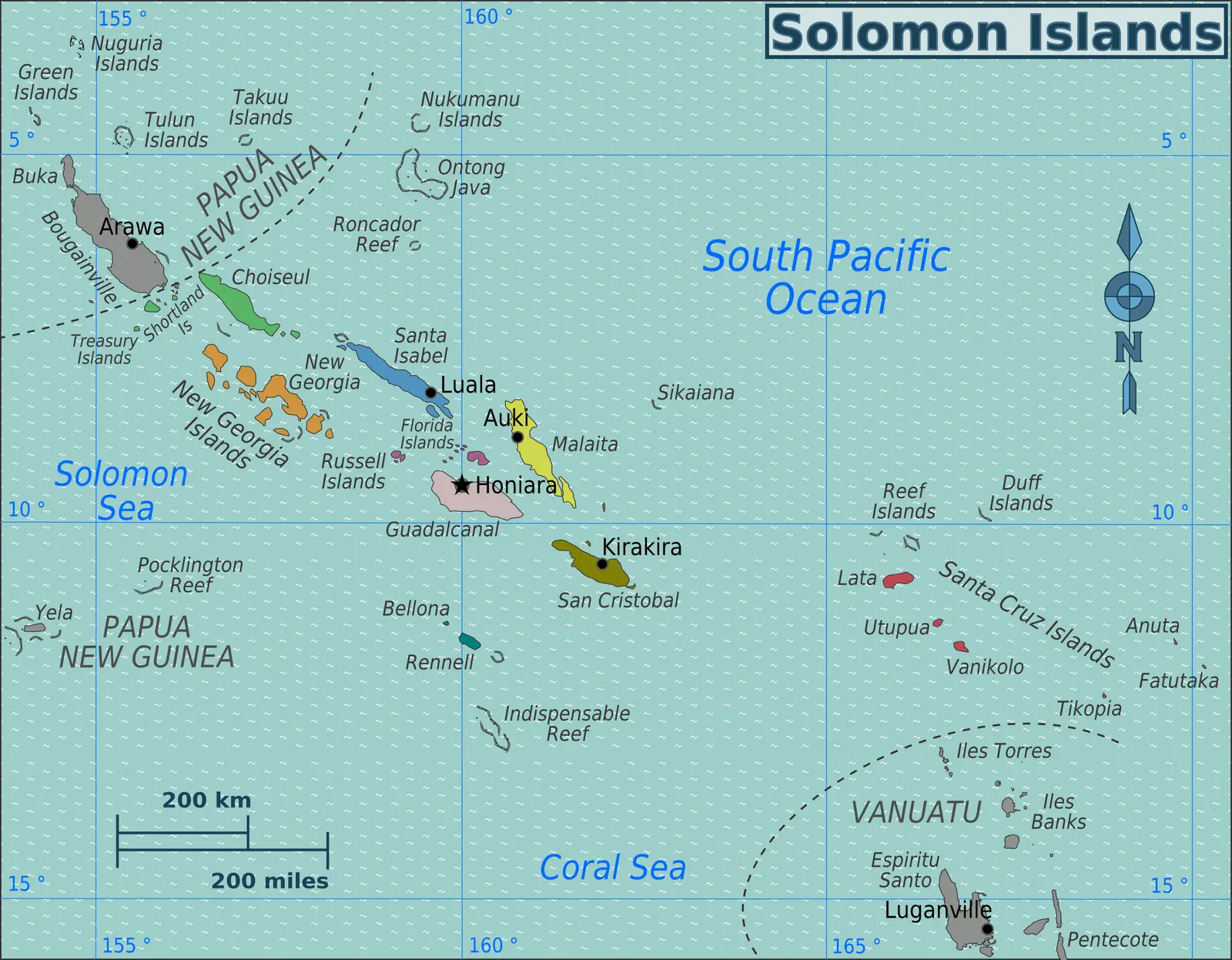
Solomon Islands Regions Map
Click or tap the map to enlarge it.
Solomon Islands Regions Map: Key Takeaways
- The Solomon Islands is composed of several regions that offer diverse landscapes and cultures.
- The map provides an overview of these regions, making it easier for travelers to navigate and plan their itineraries.
- Each region in the Solomon Islands has its own unique attractions, such as stunning beaches, vibrant coral reefs, and traditional villages.
- By exploring the map, visitors can gain a deeper understanding of the country’s geography and make informed decisions about their travels.
History of the Solomon Islands
The Solomon Islands is a sovereign country consisting of a wide archipelago located in the western Pacific Ocean. The islands have a rich history, dating back thousands of years. The indigenous people of the Solomon Islands have inhabited the region for centuries, with evidence of human existence on the islands dating back to at least 3,000 BCE. These early settlers laid the foundation for the unique culture and traditions that still thrive in the region today.
The islands were named by the Spanish explorer Álvaro de Mendaña de Neira, who arrived in the area in 1568. He named them “Islas Solomón” after the biblical King Solomon, believing that the islands were the source of the legendary wealth of King Solomon’s mines. European contact in the region increased during the 18th and 19th centuries when British and German expeditions explored and charted the islands. The Solomon Islands became a British protectorate in the late 19th century and gained independence in 1978.
Unique Insights about the Solomon Islands
1. Diverse Topography
The Solomon Islands are known for their diverse topography, which includes mountainous regions, lush rainforests, and stunning coastal areas. The Central Province, for example, is home to the highest peak in the country, Mount Popomanaseu, reaching an elevation of 2,335 meters (7,660 feet). This diverse landscape provides ample opportunities for outdoor enthusiasts to engage in activities like hiking, birdwatching, and diving.
2. Cultural Heritage
The Solomon Islands have a rich cultural heritage, with over 70 indigenous languages spoken throughout the archipelago. Each region has its own unique customs, traditions, and art forms. Visitors can explore traditional villages, witness captivating cultural ceremonies, and discover the intricate wood carvings and shell jewelry created by local artisans. The map serves as a guide to discovering the cultural diversity of the Solomon Islands.
3. World-Class Dive Sites
The Solomon Islands are renowned for their world-class dive sites. The map highlights the various regions where divers can explore vibrant coral reefs, shipwrecks, and an abundance of marine life. Popular dive sites include the Florida Islands, Russell Islands, and Marovo Lagoon. Whether you’re a beginner or an experienced diver, the Solomon Islands offer unforgettable underwater experiences.
4. Natural Beauty
The Solomon Islands boast breathtaking natural beauty. From pristine white-sand beaches to crystal-clear turquoise waters, the islands are a paradise for nature lovers. The map showcases the different regions, ensuring visitors can easily locate and explore the most picturesque spots, such as the Western Province’s Munda and the beautiful Marau Sound in the Guadalcanal Province.
Table: Historical Facts about the Solomon Islands
| Year | Event |
|---|---|
| 1568 | Álvaro de Mendaña de Neira explores and names the islands “Islas Solomón” |
| 19th century | The Solomon Islands become a British protectorate |
| 1978 | The Solomon Islands gain independence |
Frequently Asked Questions (FAQ)
-
What is the best time to visit the Solomon Islands?
The best time to visit the Solomon Islands is during the dry season, which runs from April to October. The weather is generally sunny and less humid, making it ideal for outdoor activities.
-
How do I get to the Solomon Islands?
The Solomon Islands can be reached through international flights to Honiara International Airport, the country’s main gateway. Airlines such as Solomon Airlines and Fiji Airways offer regular flights to the Solomon Islands from various destinations.
-
Are there any visa requirements for visiting the Solomon Islands?
Yes, visitors to the Solomon Islands require a valid passport and a tourist visa. The visa can be obtained upon arrival at the Honiara International Airport or through a Solomon Islands embassy or consulate.
-
What are the must-visit regions in the Solomon Islands?
Some of the must-visit regions in the Solomon Islands include Guadalcanal, Malaita, Western Province, and Central Province. Each region offers its own unique attractions and experiences.
-
What are the popular activities in the Solomon Islands?
Popular activities in the Solomon Islands include snorkeling, diving, fishing, hiking, and exploring cultural heritage sites. The islands offer a range of opportunities for both adventure seekers and those seeking relaxation amidst stunning natural beauty.
-
Are English-speaking guides available in the Solomon Islands?
Yes, English-speaking guides are available in the major tourist areas. They can assist visitors with navigating the regions, coordinating activities, and providing insights into the local culture and history.
-
Is it safe to travel to the Solomon Islands?
The Solomon Islands are generally safe for travelers. However, it is always important to take necessary precautions, such as staying informed about the local customs and traditions, respecting the natural environment, and being mindful of personal belongings.
External Links
LSI Keywords
- Solomon Islands map
- Regions of Solomon Islands
- Solomon Islands geography
- Solomon Islands history
- Solomon Islands culture
- Solomon Islands attractions
- Solomon Islands tourism