Argentina Climate Zones Map
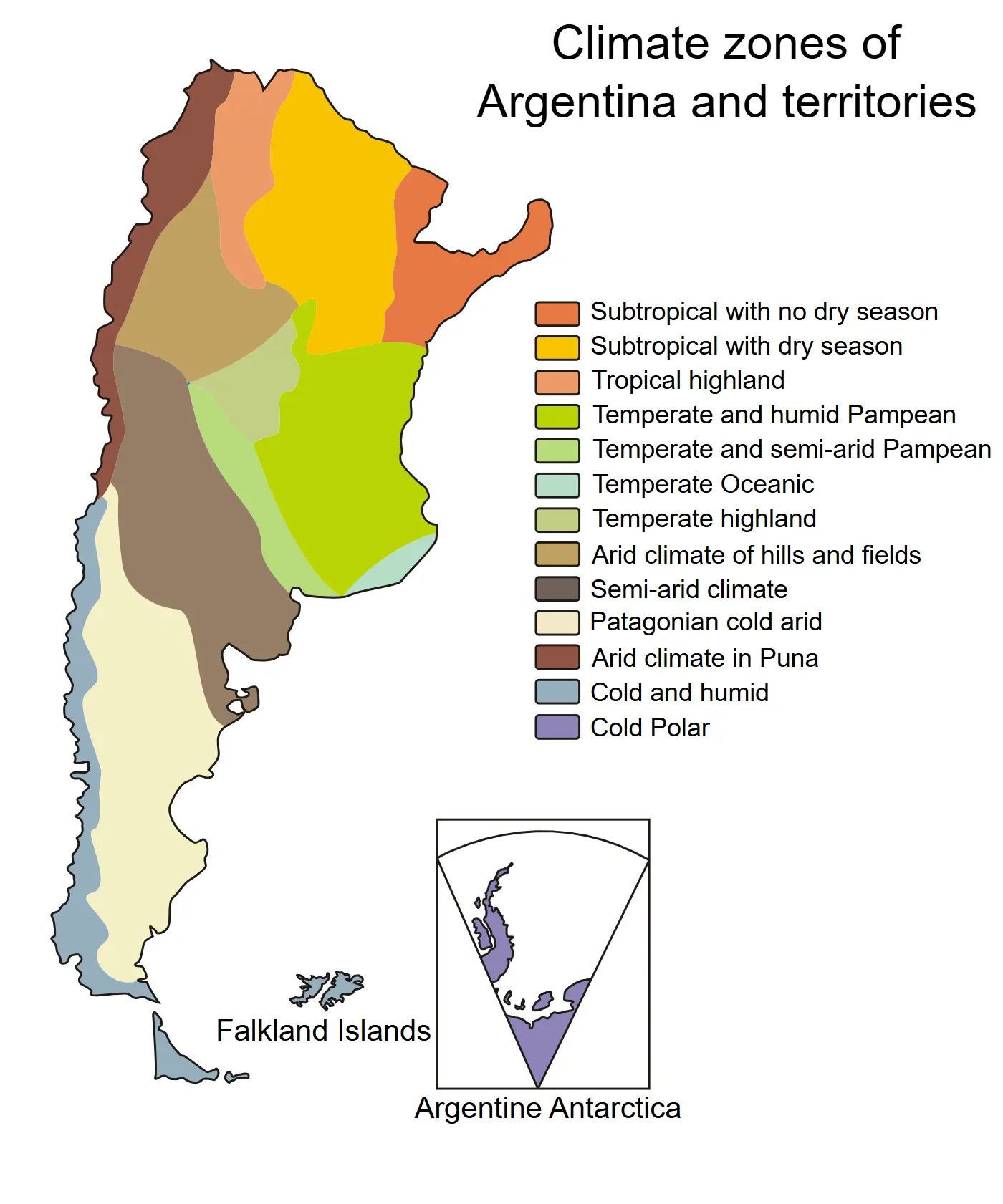
Click or tap the map to enlarge it.
Key Takeaways
- Argentina’s climate can be divided into several distinct zones based on temperature and precipitation patterns.
- The country experiences a wide range of climates, from tropical to polar, due to its vast size and varying topography.
- The climate zones in Argentina play a crucial role in determining the agricultural activities and biodiversity within the country.
- Understanding Argentina’s climate zones is essential for travelers and those planning outdoor activities to make informed decisions.
History
The study of climate and its patterns in Argentina began during the early 20th century, with meteorological stations established across the country. The goal was to better understand the diverse climatic conditions and provide valuable information for agriculture, urban planning, and resource management.
Over the years, extensive research has been conducted to classify Argentina’s climate into various zones. Climatologists have analyzed temperature, precipitation, wind patterns, and other climate variables to define the different regions with similar climatic characteristics.
Unique Insights
1. Intense Contrasts: Argentina is known for its extreme climate contrasts, from the subtropical climate in the north to the subpolar climate in the south. Such diversity in climate zones allows for a wide range of agricultural and industrial activities.
2. The Andes Influence: The presence of the Andes mountain range significantly impacts Argentina’s climate. It acts as a barrier and contributes to the aridity of some regions, such as the western parts of Patagonia.
3. El Niño and La Niña: These climate phenomena have a considerable influence on Argentina’s weather patterns. El Niño events can lead to increased rainfall, while La Niña events often bring drier conditions.
4. The Pampas Grasslands: The fertile agricultural region known as the Pampas experiences a temperate climate, making it ideal for cereal cultivation and livestock grazing. It plays a crucial role in Argentina’s economy.
5. Southern Patagonia: The southernmost region of Argentina experiences a subpolar climate, characterized by freezing temperatures and strong winds. It is home to unique wildlife and breathtaking landscapes, including glaciers.
Table of Relevant Facts
| Climate Zone | Main Characteristics |
|---|---|
| Tropical | High temperatures and abundant rainfall throughout the year; found in the northernmost regions of Argentina. |
| Subtropical | Hot and humid summers, mild winters, and moderate rainfall; covers the northeastern provinces. |
| Temperate | Moderate temperatures and well-distributed rainfall; includes the central and eastern regions, including the Pampas Grasslands. |
| Desert | Low rainfall, high temperatures in summer, and mild winters; encompasses parts of Patagonia. |
| Subpolar | Freezing temperatures, strong winds, and low precipitation; found in southern Patagonia and Tierra del Fuego. |
Frequently Asked Questions (FAQ)
-
What is the climate like in northern Argentina?
The northern regions of Argentina have a tropical climate with high temperatures and abundant rainfall throughout the year.
-
How does the Andes affect Argentina’s climate?
The Andes mountain range acts as a barrier, creating a rain shadow effect that contributes to aridity in western Patagonia.
-
Which region of Argentina is known for its fertile agricultural land?
The Pampas region, known for its grasslands, has a temperate climate and is recognized for its significant agricultural activities.
-
What are the characteristics of the desert climate found in Argentina?
Desert regions in Argentina experience low rainfall, high temperatures during summer, and mild winters.
-
What can be found in southern Patagonia?
Southern Patagonia is known for its subpolar climate and remarkable landscapes, including glaciers and unique wildlife.
-
How do El Niño and La Niña impact Argentina’s weather?
El Niño events often lead to increased rainfall, while La Niña events can bring drier conditions to different regions of Argentina.
-
Why is understanding Argentina’s climate zones important?
Understanding Argentina’s climate zones is vital for travelers and those planning outdoor activities to make informed decisions about necessary clothing, equipment, and timing.