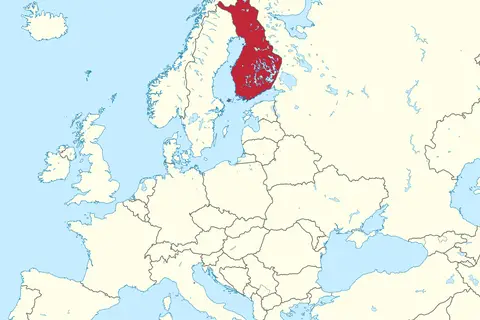
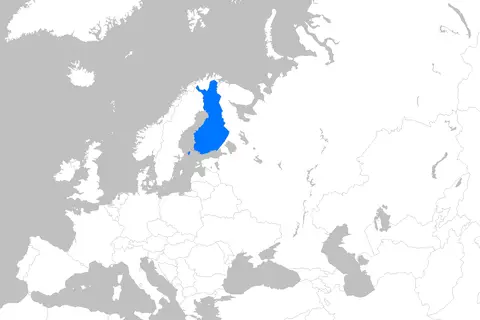
Finland Location Map
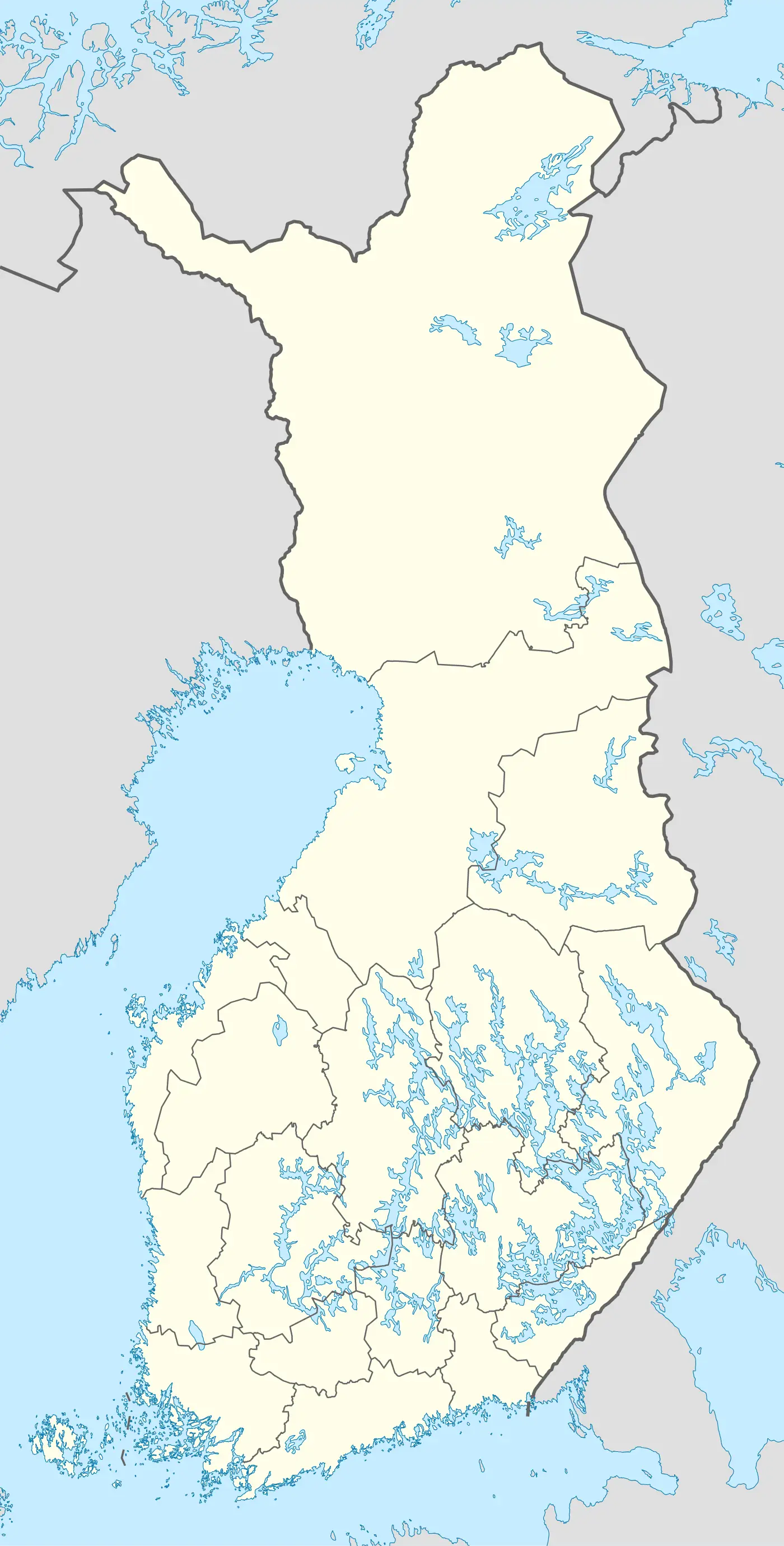
Click or tap the map to enlarge it.
Finland Location Map: Key Takeaways
- Finland is a Nordic country located in Northern Europe.
- It is known for its beautiful landscapes, numerous lakes, and northern lights.
- The country is bordered by Sweden to the west, Russia to the east, and Norway to the north.
- Finland’s capital and largest city is Helsinki.
- The country has a rich history and a unique culture.
History of Finland
Finland has a long and complex history. The earliest known inhabitants of Finland were the Sami people, who lived in the region for thousands of years. The region then came under Swedish rule in the 12th century and remained a part of the Kingdom of Sweden until the early 19th century.
In 1809, Finland was ceded by Sweden to Russia as a result of the Finnish War. Finland then became an autonomous Grand Duchy within the Russian Empire. However, during this time, a growing sense of Finnish nationalism emerged, leading to the declaration of independence on December 6, 1917.
Following independence, Finland experienced a brief civil war but quickly turned its attention to nation-building. The country developed rapidly in the 20th century and played a significant role in World War II. Despite being invaded by the Soviet Union during the war, Finland managed to defend its independence and maintain its democratic system of government.
Unique Insights
1. Finland is known as the “Land of a Thousand Lakes” due to its abundance of lakes, numbering around 187,888.
2. The aurora borealis, also known as the northern lights, is a natural phenomenon often visible in Finland’s Lapland region during winter months.
3. The Finnish education system is highly regarded worldwide, consistently ranking among the top performers in international assessments.
Table of Relevant Facts
| Year | Event |
|---|---|
| 1809 | Finland becomes an autonomous Grand Duchy within the Russian Empire. |
| 1917 | Finland declares independence from Russia. |
| 1939-1940 | Winter War: Finland fights against the Soviet Union. |
| 1955 | Finland becomes a member of the United Nations. |
Frequently Asked Questions
1. What is the official language of Finland?
The official languages are Finnish and Swedish. Finnish is the more widely spoken language.
2. Can you see the Northern Lights in Finland?
Yes, especially in the northern parts of Finland, such as Lapland, the Northern Lights can be seen during the winter months.
3. What are the main attractions in Finland?
Some of the main attractions include the capital city Helsinki, the Finnish Lakeland, Lapland, and the Archipelago Sea.
4. Is Finland a member of the European Union?
Yes, Finland has been a member of the European Union since 1995.
5. What is the climate like in Finland?
Finland has a predominantly cold climate with long winters and short summers. The northern parts experience Arctic temperatures.
6. How is the healthcare system in Finland?
Finland has a comprehensive and efficient healthcare system, providing universal coverage to its citizens.
7. Are there any unique cultural traditions in Finland?
Yes, sauna bathing is an integral part of Finnish culture. It is a social and relaxing activity enjoyed by both locals and tourists.