Human Language Families Map
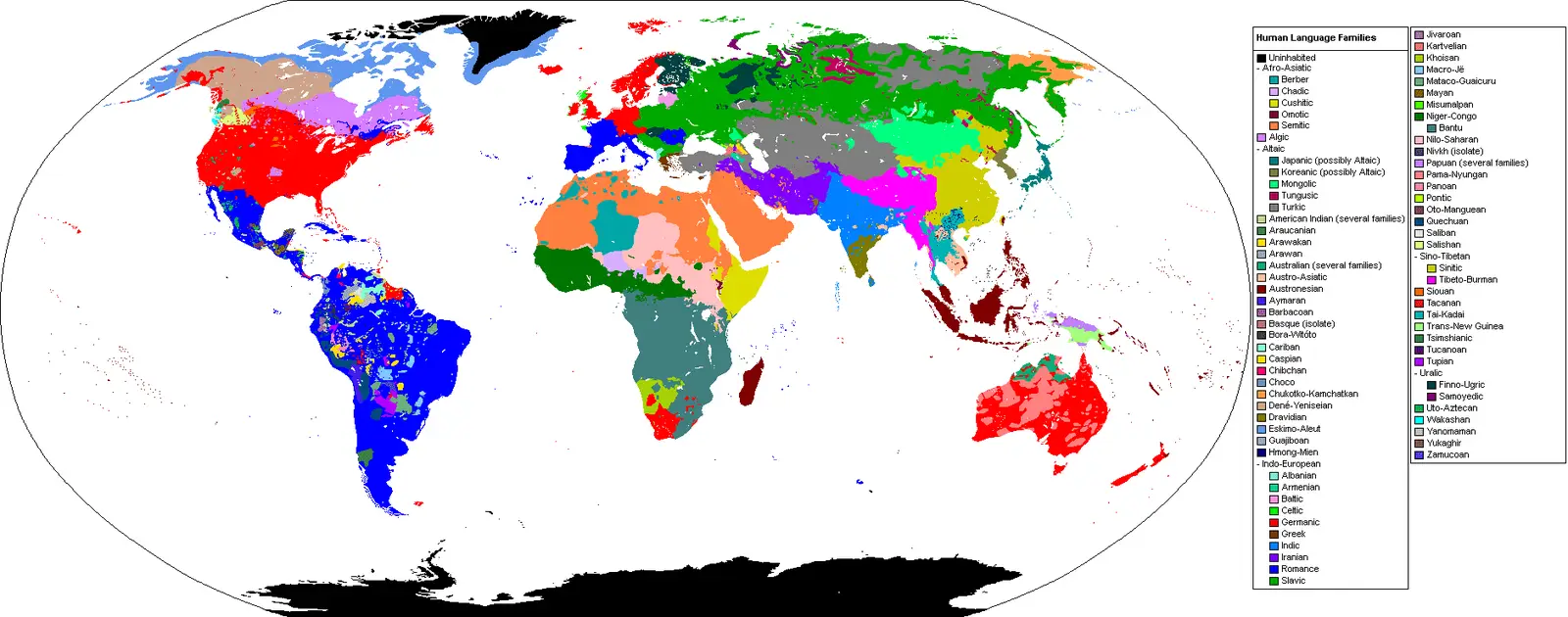
Click or tap the map to enlarge it.
The Human Language Families Map – A Comprehensive Guide
Key Takeaways
- The Human Language Families Map visually represents the relationships between different language families around the world.
- It is a valuable resource for linguists, anthropologists, and language enthusiasts.
- Understanding language families helps us explore the origins and evolution of human languages.
- The map showcases the diversity of languages spoken globally, highlighting both major and minor families.
- Studying language families aids in preserving endangered languages and understanding cultural heritage.
History and Significance
The Human Language Families Map is a cartographic representation that depicts the complex web of relationships between different language groups across the globe. This map is a result of extensive research and collaboration among linguists, anthropologists, and cartographers. It serves as a comprehensive guide for understanding the linguistic diversity of humanity.
The origins of the language families can be traced back thousands of years. As humans migrated across the continents, isolated groups developed unique languages rooted in their respective cultures. Over time, these languages evolved independently, giving rise to distinct language families. The Human Language Families Map allows us to explore the connections between these families and their geographical distribution.
Unique Insights
1. Language Diversity: The map provides a visual representation of the incredible diversity of languages spoken worldwide. It showcases the complex intertwining of language families and helps us appreciate the rich tapestry of human communication.
2. Cross-Cultural Connections: By studying language families, we discover connections between geographically distant regions. The map reveals surprising links between languages that have evolved across continents through historical migrations and cultural exchanges.
3. Endangered Languages: The map raises awareness about endangered languages by highlighting smaller, less-known language families. This knowledge is crucial for language preservation efforts and encourages linguistic diversity conservation.
4. Cultural Heritage: Understanding the language families allows us to delve deeper into cultural traditions, folklore, and customs associated with specific communities. This knowledge fosters mutual understanding and appreciation of different cultures.
Relevant Facts about Human Language Families
| Language Family | Geographical Distribution |
|---|---|
| Indo-European | Europe, parts of Asia, and North America |
| Sino-Tibetan | China, Tibet, and parts of Southeast Asia |
| Afro-Asiatic | Africa, the Arabian Peninsula, and parts of Asia |
| Austronesian | Islands of the Pacific and Southeast Asia |
| Niger-Congo | Sub-Saharan Africa |
Frequently Asked Questions (FAQ)
1. Why are language families important?
Understanding language families helps us trace the historical, cultural, and linguistic connections between various communities and regions. It aids in language preservation, contributes to our understanding of human migration patterns, and assists in deciphering ancient scripts.
2. How many language families are there?
There are approximately 142 recognized language families, with varying numbers of languages within each family.
3. Can two unrelated languages belong to the same geographical region?
Yes, similar-sounding or unrelated languages can inhabit the same geographical area due to historical factors, cultural exchange, or borrowings between communities.
4. Are language families static or do they change over time?
Language families are not static. They continuously evolve, split, and merge over time, just like languages themselves, reflecting the dynamic nature of human communication.
5. How is language classification determined?
Language classification is determined through systematic research, linguistic analysis, shared vocabulary, grammar similarities, and other shared features among languages within a family.
6. What does it mean when a language is endangered?
An endangered language is one that is at risk of becoming extinct. Factors such as diminishing speakers, lack of intergenerational transmission, or cultural assimilation contribute to language endangerment.
7. How can I contribute to language preservation efforts?
You can contribute to language preservation efforts by supporting organizations working to document and revitalize endangered languages, learning and using endangered languages, and promoting cultural diversity.