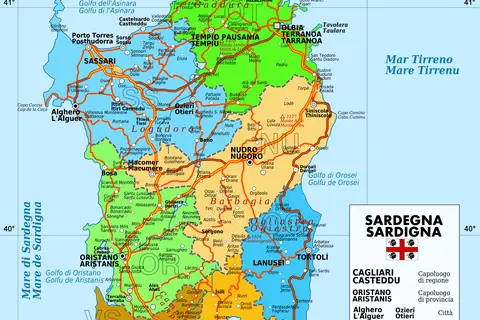
Sardinia Language Map
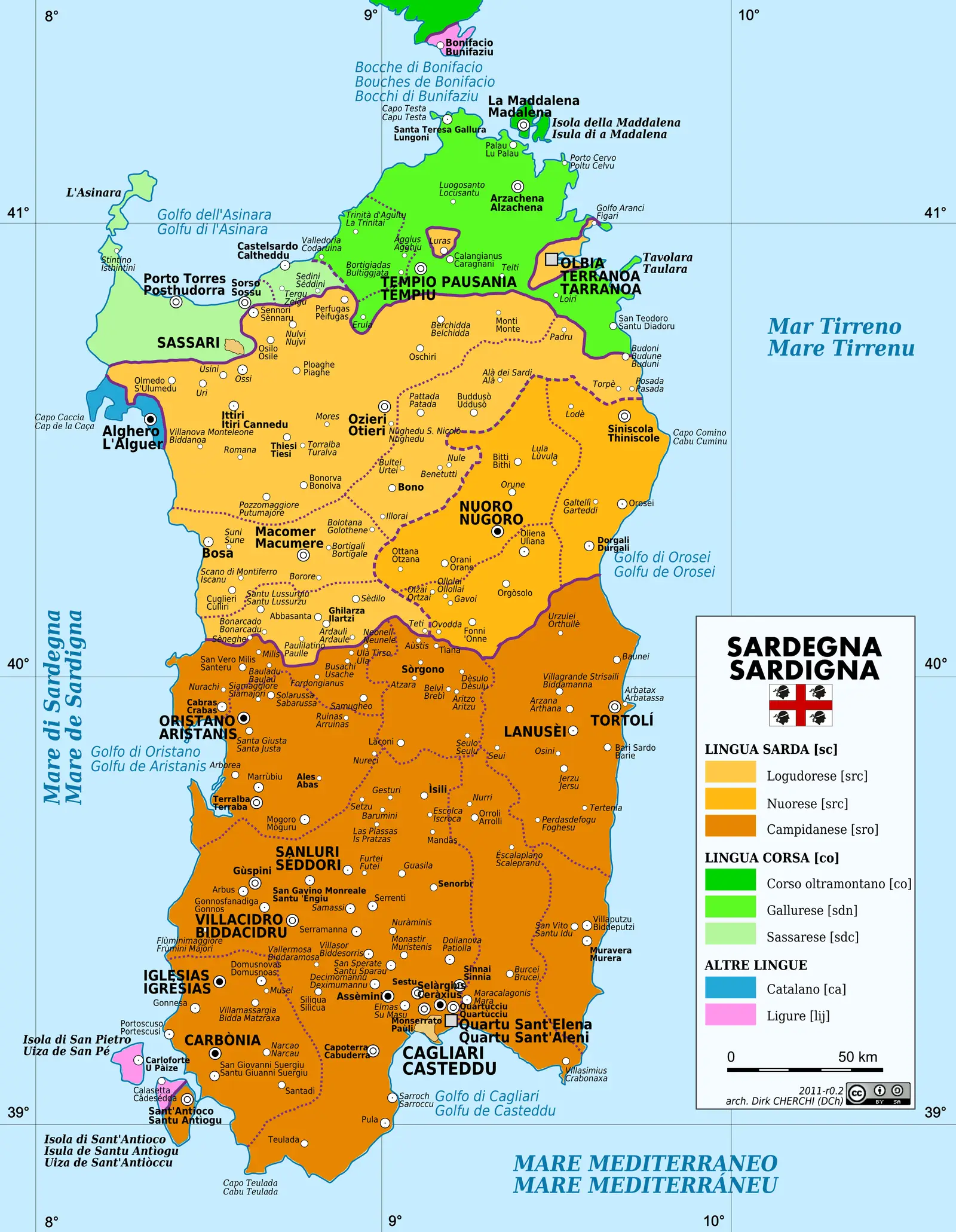
Click or tap the map to enlarge it.
The Sardinia Language Map: Exploring Linguistic Diversity
Key Takeaways
- The Sardinia Language Map showcases the diverse languages spoken on the island and reflects its rich cultural heritage.
- Sardinia is home to multiple indigenous languages including Sardinian, Corsican, and Catalan.
- The map provides valuable insights into the distribution and revitalization efforts of these languages.
- Exploring the Sardinia Language Map offers a unique perspective on the linguistic diversity of the island.
History
The Sardinia Language Map offers a fascinating glimpse into the linguistic history of the island. Sardinia, located in the Mediterranean Sea, has been inhabited by various civilizations throughout its history. The island’s unique geography and the influence of different cultures have shaped its linguistic landscape.
The indigenous language of Sardinia is Sardinian, which belongs to the Romance language family. However, due to its strategic location, Sardinia has been influenced by other languages, including Phoenician, Punic, Latin, Genoese, Catalan, and Tuscan.
Over time, these influences resulted in the emergence of multiple dialects and languages. The Sardinia Language Map captures the current distribution of these languages and offers insights into their historical development.
Unique Insights
The Sardinia Language Map provides several unique insights into the linguistic diversity of the island:
- The Sardinian language, spoken primarily by the local population, is divided into several dialects, showcasing regional variations.
- Corsican, a closely related language to Sardinian, is spoken in the northern region of Sardinia.
- Catalan has historical roots in Sardinia and is spoken in the city of Alghero.
- Various Italian dialects influenced by different regions of mainland Italy can be found across the island.
- Sardinia’s linguistic diversity reflects the historical connections and migrations between the island and neighboring regions.
Sardinia Language Map Facts
| Language | Region(s) | Number of Speakers |
|---|---|---|
| Sardinian | Island-wide | Approximately 1.2 million |
| Corsican | Northern Sardinia | Approximately 100,000 |
| Catalan | Alghero | Approximately 20,000 |
| Italian dialects | Island-wide | Varies across regions |
Frequently Asked Questions (FAQ)
1. What is the significance of the Sardinia Language Map?
The Sardinia Language Map is significant because it allows us to understand the linguistic diversity of the island and the coexistence of multiple languages.
2. How did Sardinia develop its linguistic diversity?
Sardinia’s linguistic diversity can be attributed to various historical influences, including the migrations and connections with neighboring regions throughout centuries.
3. Are all Sardinian languages endangered?
While some Sardinian languages, such as Catalan, face challenges, efforts are being made to promote and revitalize the use of indigenous languages across the island.
4. Can non-native speakers learn Sardinian?
Yes, there are resources available for non-native speakers who wish to learn Sardinian. Language schools and online courses offer opportunities to gain proficiency in the language.
5. What is the role of language in Sardinian culture?
Language plays a significant role in preserving Sardinian culture and heritage. It acts as a vehicle for conveying traditions, stories, and oral history.
6. How can one contribute to the preservation of Sardinian languages?
Supporting local initiatives, learning the language, and promoting its use in daily life are some ways to contribute to the preservation of Sardinian languages.
7. Are there any ongoing language revitalization projects in Sardinia?
Yes, there are projects aimed at promoting the use of Sardinian languages, including education programs, cultural events, and documentation efforts.