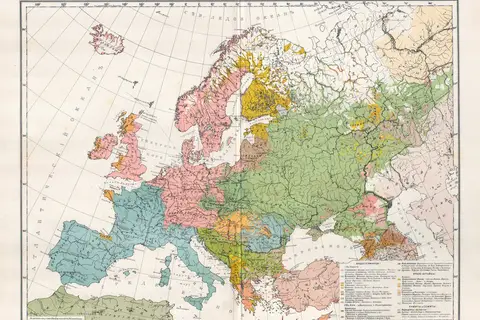
Map of Europe and Asia About 1200 Ad H G Wells Outline of History Page 358
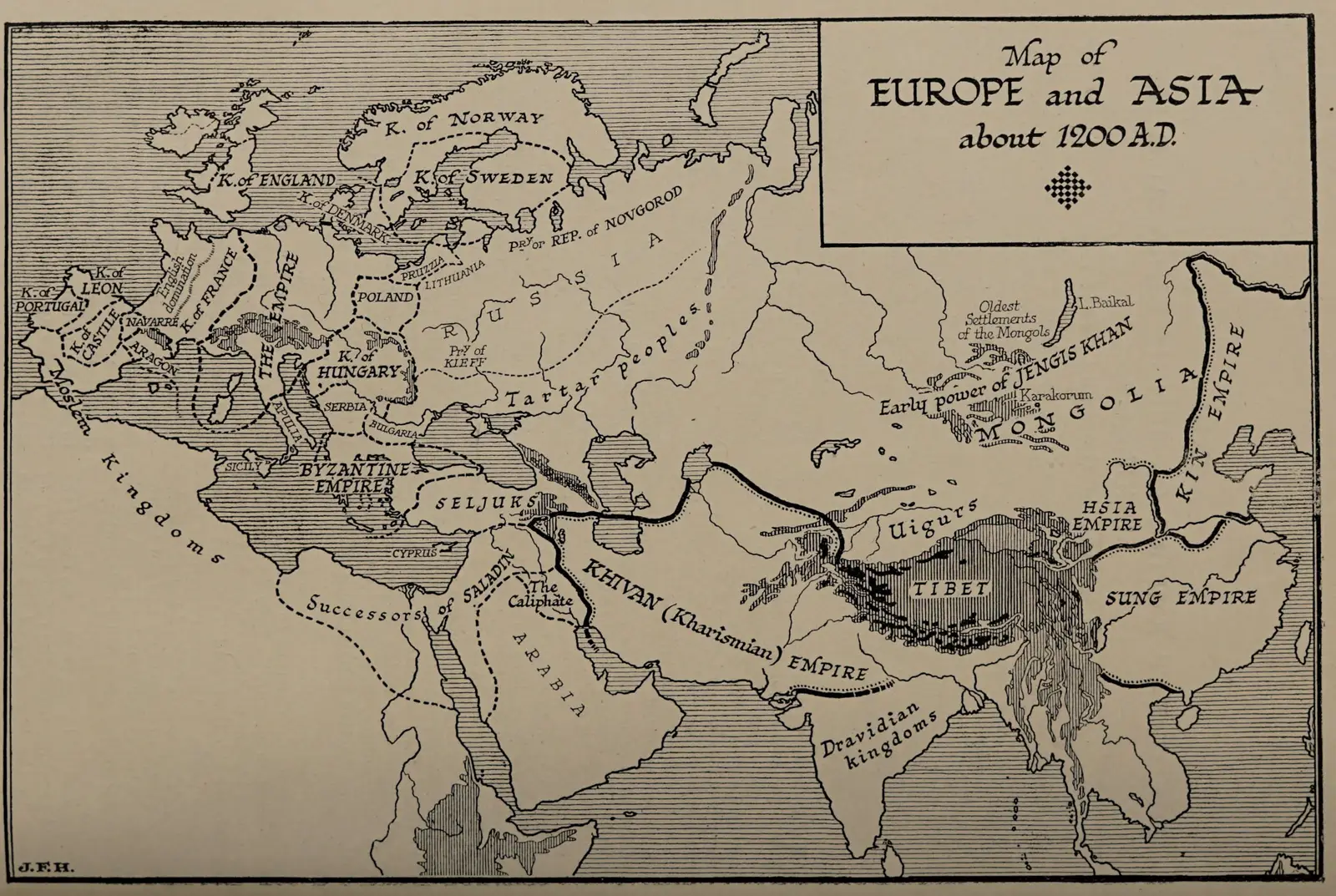
Click or tap the map to enlarge it.
Map Of Europe And Asia About 1200 Ad – H G Wells Outline Of History Page 358
Key Takeaways
- The map showcases Europe and Asia in the year 1200 AD.
- It provides an overview of the political boundaries and major cities during that period.
- The map offers insights into the historical context of the time, including significant events and cultural development.
History
The map of Europe and Asia from around 1200 AD, as documented on page 358 of H G Wells’ “Outline of History,” provides a glimpse into the political landscape and cultural dynamics of that era. During this time, various empires and civilizations thrived, leaving a significant impact on the regions they controlled.
Europe, during the High Middle Ages, witnessed the existence of powerful entities such as the Holy Roman Empire, with its vast extent of land encompassing present-day Germany, Austria, Czech Republic, and parts of Italy. In the south, the Byzantine Empire, which predominantly covered Eastern Europe and regions of the Middle East, flourished.
In Asia, the Song Dynasty ruled over China, providing stability and advancements in various fields like technology, arts, and governance. The Khwarazmian Empire, with its capital in Samarkand, enjoyed prominence in Central Asia and played a significant role in trading along the Silk Road.
Unique Insights
The map reveals the intricate trade routes that connected Europe and Asia during this period. The Silk Road, an extensive network of routes stretching from China to the Mediterranean, facilitated the exchange of goods, ideas, and cultures between the East and the West. This vibrant trade network played a significant role in shaping the development and interactions of civilizations during this time.
Furthermore, the map illustrates the diverse political boundaries and city-states across Europe and Asia, highlighting the geopolitical complexity of the era. It showcases the coexistence of various cultures, religions, and languages, creating a rich tapestry of interconnected societies.
Relevant Facts
| Event | Date |
|---|---|
| The Fourth Crusade | 1202-1204 |
| Mongol Empire under Genghis Khan | 1206-1227 |
| Magna Carta | 1215 |
| Marco Polo’s journey to Asia | 1271-1295 |
FAQ
1. What is the significance of the Silk Road during this period?
The Silk Road played a crucial role in facilitating trade and cultural exchange between Europe and Asia. It allowed the transportation of goods, such as silk, spices, and precious metals, as well as the exchange of knowledge and ideas, ultimately shaping the development of civilizations.
2. Which empires were dominant in Europe and Asia in 1200 AD?
In Europe, the Holy Roman Empire and the Byzantine Empire were prominent, while in Asia, the Song Dynasty in China and the Khwarazmian Empire in Central Asia held significant influence.
3. What major events occurred during this period?
Several noteworthy events took place, including the Fourth Crusade, the rise of the Mongol Empire under Genghis Khan, the signing of the Magna Carta, and Marco Polo’s journey to Asia.
4. How did the political boundaries differ between Europe and Asia?
Europe had various kingdoms, city-states, and feudal territories ruled by monarchs and nobles. In contrast, in Asia, large empires such as the Song Dynasty and the Khwarazmian Empire held control over vast territories.
5. Were there any cultural exchanges between Europe and Asia during this period?
Yes, the Silk Road facilitated extensive cultural exchanges, allowing the transmission of ideas, technologies, languages, and even religions between Europe and Asia.
6. What impact did the Silk Road have on the development of civilizations?
The Silk Road played a pivotal role in fostering economic growth, cultural diffusion, and technological advancements through the exchange of goods, knowledge, and ideas. It influenced the development of art, science, and trade routes, shaping the interconnected history of civilizations.
7. What was the state of technological advancements during this period?
Technological advancements varied across regions. In Europe, advancements like the invention of the mechanical clock were observed, while in Asia, the Song Dynasty made remarkable progress in various fields, including agriculture, metallurgy, and printing technology.