Map of the Roman Empire at Its Height
Key Takeaways:
- The Roman Empire was one of the largest and most powerful empires in history.
- At its height, the Roman Empire spanned three continents and included diverse territories.
- The empire’s extensive road network and administrative system contributed to its success.
- Understanding the map of the Roman Empire provides valuable insights into ancient history and culture.
History: The Roman Empire
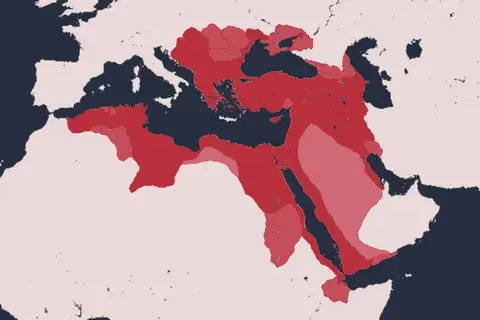
The Roman Empire, which lasted from 27 BC to 476 AD, was a significant period in world history. At its height, the empire covered vast territories, including Europe, North Africa, and Western Asia. The map of the Roman Empire at its height showcases the extent of its power and influence.
The empire gained its power through a series of military conquests and strategic alliances. Under the leadership of skilled emperors, the Romans expanded their borders and established a vast empire. The map not only displays the territorial expanse but also highlights key cities, provinces, and notable landmarks.
Unique Insights
The map of the Roman Empire provides unique insights into the cultural, political, and economic aspects of this ancient civilization. Here are some notable insights:
- Administrative Structure: The empire was divided into provinces, each governed by a governor appointed by the emperor. This administrative system enabled efficient control and governance.
- Major Cities: The map highlights important cities like Rome, Athens, Alexandria, Carthage, and Constantinople. These urban centers played crucial roles in trade, education, and governance.
- Road Network: The Roman Empire was known for its well-developed road network. The map showcases the extensive network of roads, which facilitated trade, communication, and military movement.
- Borders and Boundaries: The map clearly marks the external boundaries of the Roman Empire, emphasizing its territorial extent. These borders changed over time as the Roman Empire expanded and contracted.
- Cultural Influence: The empire’s expansion enabled the spread of Roman culture throughout its territories. The map showcases regions influenced by Roman architecture, language, law, and customs.
Table: Relevant Facts during the Roman Empire
| Event | Date | Description |
|---|---|---|
| Punic Wars | 264-146 BC | A series of wars fought between Rome and Carthage, resulting in Roman dominance over the Mediterranean. |
| Julius Caesar’s Assassination | March 15, 44 BC | The assassination of Julius Caesar marked a turning point in Roman history and led to the rise of Augustus as the first Roman Emperor. |
| Construction of the Colosseum | 70-80 AD | The Colosseum, a grand amphitheater in Rome, was built during this period and hosted various spectacles. |
FAQs About the Roman Empire Map
1. What territories were part of the Roman Empire at its height?
At its height, the Roman Empire included territories such as modern-day Italy, Greece, Egypt, France, Spain, and parts of England.
2. How did the Roman Empire administer such a vast territory?
The empire was divided into provinces, each governed by appointed officials who reported to the emperor. This administrative structure helped maintain control and order.
3. What role did the Roman road network play?
The well-developed road network facilitated trade, communication, and military movement throughout the empire. It contributed to the empire’s overall efficiency and expansion.
4. What impact did the Roman Empire have on culture?
The Roman Empire influenced culture by spreading Roman architecture, language, law, and customs to the regions under its control. It left a lasting imprint on the territories it ruled.
5. Why did the Roman Empire decline?
The decline of the Roman Empire was influenced by various factors, including economic instability, external invasions, and internal conflicts. It eventually led to the fall of the Western Roman Empire in 476 AD.
6. What are some famous landmarks within the Roman Empire?
The Roman Empire was home to iconic landmarks such as the Colosseum, Roman Forum, Hadrian’s Wall, and the Pantheon.
7. Can I visit any remnants of the Roman Empire today?
Absolutely! Many structures and ruins from the Roman Empire still exist today. Popular sites include the Colosseum in Rome, the Acropolis in Athens, and the Baths of Caracalla.