Racial Map of the World2
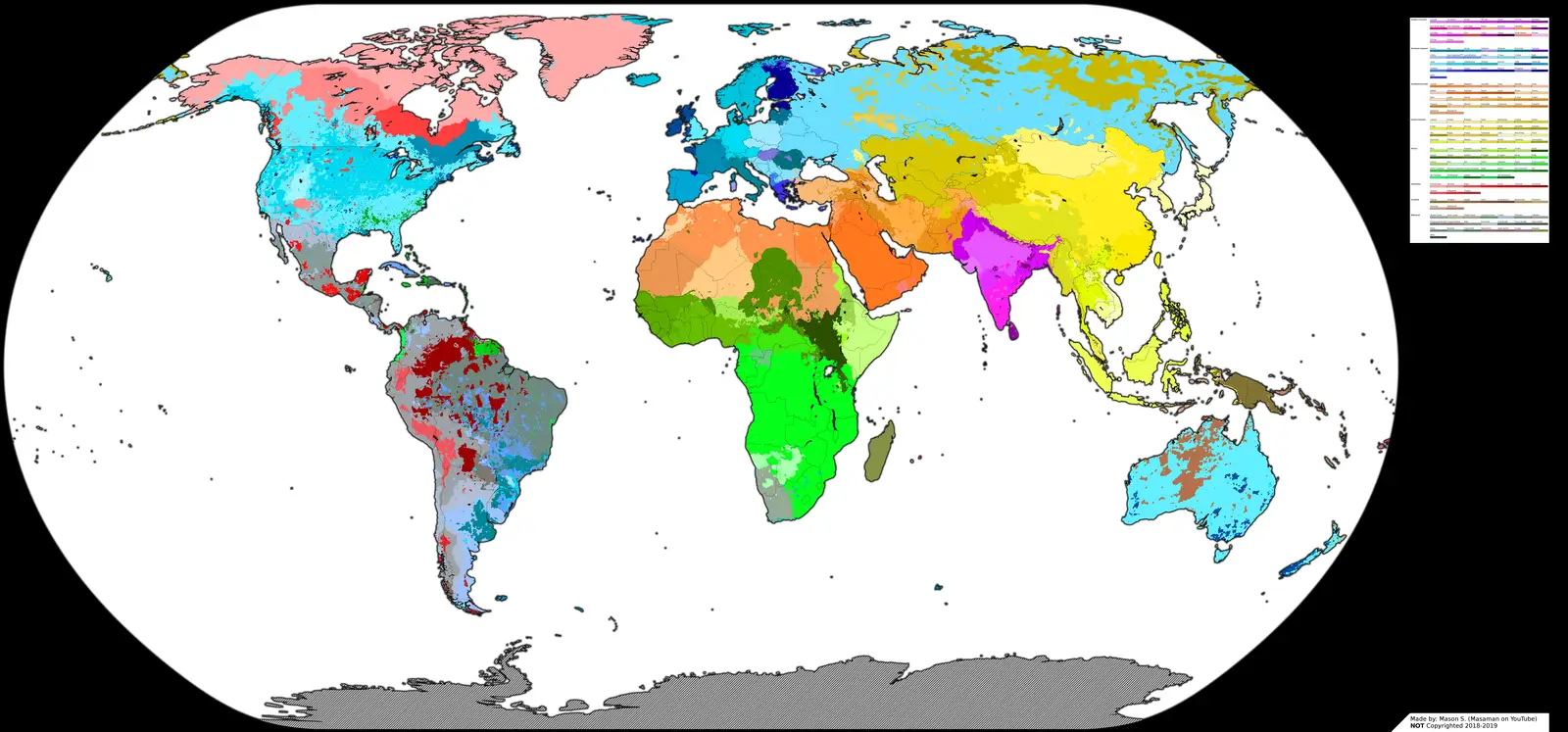
Click or tap the map to enlarge it.
Key Takeaways
- Racial Map of the World provides an overview of the global distribution of different ethnicities and races.
- Understanding racial demographics can help in studying various sociological, cultural, and historical aspects.
- This interactive map brings awareness to the diversity and interconnectedness of humanity.
- Race should be seen as a social construct, not as a biological determinant of human differences.
- Explore the map to learn about racial patterns and consider how they have evolved over time.
History of Racial Map of the World2
The Racial Map of the World2 is a significant cartographic representation that helps us understand the complex and evolving nature of human diversity. Created by expert cartographers and sociologists, this interactive map offers valuable insights into the global distribution of different races and ethnicities.
It is essential to recognize that race is a social construct and not a biological determination of human differences. The classification of races has varied across cultures, and historical events have influenced the way we perceive and categorize different ethnic groups.
Unique Insights
- The Racial Map of the World2 showcases the interconnectedness of races and ethnicities, highlighting human migration patterns throughout history.
- Through this map, we can observe the impact of colonization, the slave trade, and other historical factors on the distribution of races across continents.
- It helps in understanding the phenomenon of multiculturalism and the blending of various ethnicities in different regions.
- The map also emphasizes the importance of embracing diversity and promoting equality among all races.
- By analyzing racial distribution, we can identify regions that have experienced significant cultural exchange and those that have remained relatively homogenous.
Table of Relevant Facts
| Event | Year | Impact on Racial Distribution |
|---|---|---|
| Age of Exploration | 15th-17th centuries | Increased contact between different races through exploration and colonization. |
| Transatlantic Slave Trade | 16th-19th centuries | Forced migration of African populations to various parts of the world, leading to concentrated populations in certain regions. |
| European Colonialism | 16th-20th centuries | European powers exerted influence over vast territories, resulting in the spread of their own populations and cultural assimilation. |
| Post-WWII Decolonization | Mid-20th century | Many former colonies gained independence, resulting in multicultural societies as people returned to their home countries. |
Frequently Asked Questions (FAQ)
1. What is the significance of the Racial Map of the World2?
The Racial Map of the World2 provides an overview of the global distribution of different races and ethnicities, facilitating the understanding of human diversity and historical factors that have influenced racial patterns.
2. How is race defined in the context of this map?
Race, in this context, is a social construct and not a biological determination of human differences. The classification of races has varied across cultures, and the map reflects these cultural perceptions.
3. How can the map contribute to our knowledge of history and sociology?
The map helps us understand migration patterns of different races, the impact of historical events such as colonization and the slave trade, and the blending of various ethnicities in different regions. It aids in studying sociological and historical aspects related to race.
4. Can the map address contemporary racial issues?
The map provides insight into historical factors that have shaped current racial patterns. It can serve as a starting point for discussions on contemporary racial issues, promoting awareness and understanding.
5. Is the Racial Map of the World2 available for public use?
Yes, the map is accessible to the public and can be used for educational purposes, research, and personal exploration of racial demographics worldwide.
6. How frequently is the map updated?
The map is regularly updated to reflect evolving racial demographics. Given that racial classifications are sensitive and subject to change, it is important to consider the map as a snapshot of a specific period.
7. How can we contribute to embracing racial diversity?
We can promote embracing racial diversity by fostering inclusivity, challenging stereotypes, and advocating for equality and social justice for all individuals, regardless of their race or ethnicity.