Map of Warsaw Pact Countries
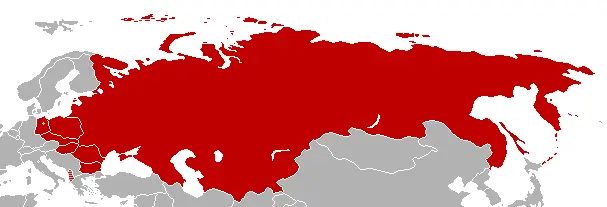
Click or tap the map to enlarge it.
Key Takeaways
- The Warsaw Pact was a military alliance formed by communist states in Eastern Europe during the Cold War.
- It was established as a response to the creation of NATO and aimed to counterbalance the influence of Western powers.
- The member countries of the Warsaw Pact were primarily from Eastern Europe, including the Soviet Union, Poland, East Germany, Czechoslovakia, Hungary, Romania, Bulgaria, and Albania.
- These countries were bound together by a mutual defense agreement.
- The fall of the Berlin Wall in 1989 and the subsequent dissolution of the Soviet Union led to the disintegration of the Warsaw Pact.
History of the Warsaw Pact
The Warsaw Pact, officially known as the Treaty of Friendship, Cooperation, and Mutual Assistance, was signed on May 14, 1955, in Warsaw, Poland. This military alliance was formed by the Soviet Union and its satellite states in response to the creation of NATO (North Atlantic Treaty Organization) by Western powers. The primary objective of the Warsaw Pact was to counterbalance the perceived threat posed by NATO and protect the socialist states in Eastern Europe.
The member countries of the Warsaw Pact included the Soviet Union, Poland, East Germany, Czechoslovakia, Hungary, Romania, Bulgaria, and Albania. These countries formed a collective defense alliance, pledging support to each other in the event of an attack. The Soviet Union, being the largest and most powerful member, played a dominant role within the pact.
Throughout the Cold War, the Warsaw Pact was emblematic of the divided world and the ideological struggle between the communist and capitalist blocs. It was seen as a means to maintain a balance of power and preserve the influence of the Soviet Union in Eastern Europe.
Unique Insights
1. Formation of the Warsaw Pact: The creation of the Warsaw Pact was a direct response to the establishment of NATO in 1949. The Soviet Union saw NATO as a threat to its security and sought to establish its own alliance to counterbalance Western influence.
2. Warsaw Pact as a Defense Mechanism: The primary purpose of the Warsaw Pact was to ensure the collective defense of its member countries. This was seen as necessary in the face of perceived aggression from the Western powers and the possibility of a military conflict.
3. Prevalence of Soviet Influence: The Soviet Union held significant influence within the Warsaw Pact, both politically and militarily. The majority of decisions were made by Moscow, often with limited input from the other member countries.
4. Control over Eastern Europe: The Warsaw Pact provided a mechanism for the Soviet Union to maintain control over the countries in Eastern Europe. It ensured political alignment with Moscow and acted as a deterrent against defection to the capitalist bloc.
5. Dissolution and Impact on Europe: The fall of the Berlin Wall in 1989 symbolized the end of the Cold War and the subsequent disintegration of the Warsaw Pact. This led to significant political changes in Eastern Europe, including the reunification of Germany and the transition to democratic systems of government.
Table of Facts – Major Events
| Year | Event |
|---|---|
| 1955 | Signing of the Warsaw Pact in Warsaw, Poland |
| 1956 | Suppression of the Hungarian Revolution by Soviet forces |
| 1968 | Soviet-led invasion of Czechoslovakia |
| 1980 | Imposition of Martial Law in Poland |
| 1989 | Fall of the Berlin Wall and beginning of the end of the Cold War |
| 1991 | Official dissolution of the Warsaw Pact |
Frequently Asked Questions (FAQ)
1. What was the purpose of the Warsaw Pact?
The primary purpose of the Warsaw Pact was to serve as a collective defense alliance against perceived aggression from NATO and Western powers.
2. Which countries were members of the Warsaw Pact?
The member countries of the Warsaw Pact included the Soviet Union, Poland, East Germany, Czechoslovakia, Hungary, Romania, Bulgaria, and Albania.
3. What was the role of the Soviet Union within the Warsaw Pact?
The Soviet Union played a dominant role within the Warsaw Pact, exercising significant political and military influence over the other member countries.
4. What events led to the dissolution of the Warsaw Pact?
The fall of the Berlin Wall in 1989 and the subsequent political changes in Eastern Europe, such as the reunification of Germany, led to the dissolution of the Warsaw Pact.
5. How did the Warsaw Pact affect the political landscape of Europe?
The existence of the Warsaw Pact contributed to the division of Europe during the Cold War. Its dissolution marked a significant shift in the political landscape, leading to the end of the Cold War and the emergence of democratic systems of government in Eastern Europe.
6. Did any countries withdraw from the Warsaw Pact?
No country formally withdrew from the Warsaw Pact. Instead, it ceased to exist following the political changes and collapse of the Soviet Union.
7. Are there any remnants of the Warsaw Pact today?
No, the Warsaw Pact dissolved in 1991 and does not exist in any form today.