Russia Rail Map
Click or tap the map to enlarge it.
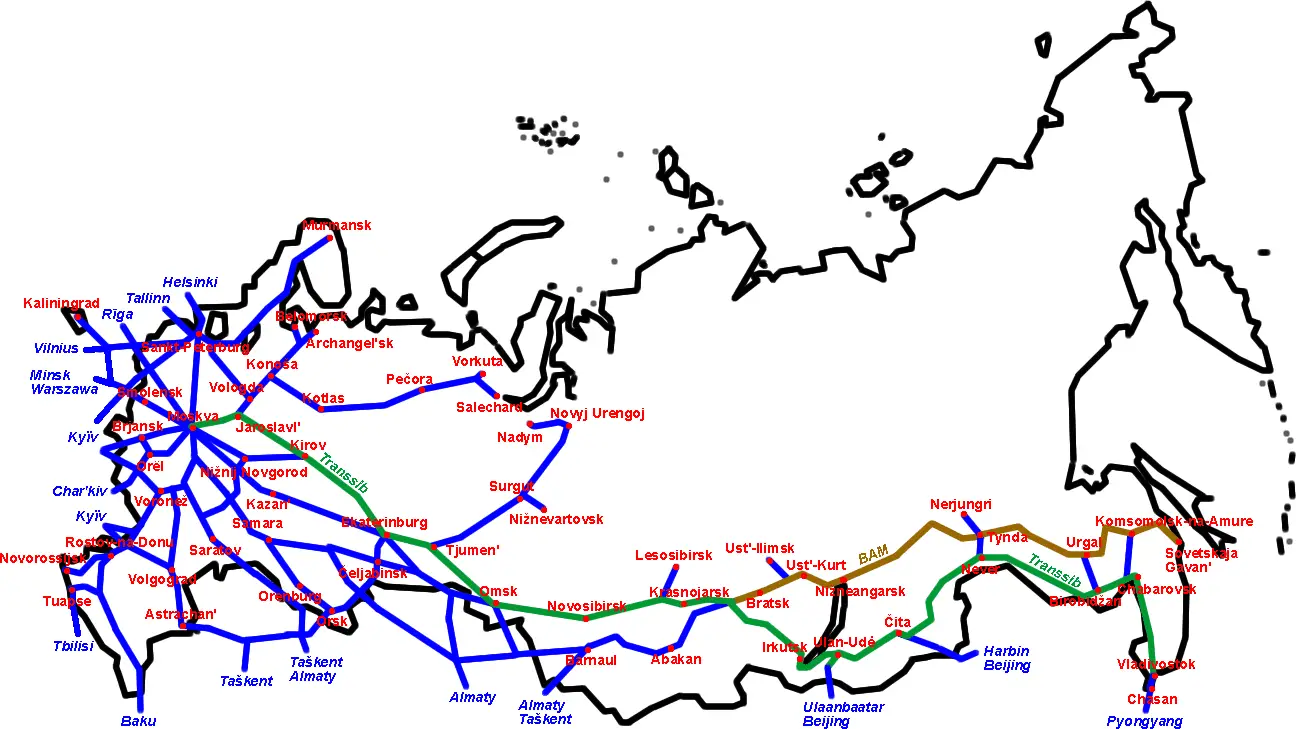
Russia Rail Map – Exploring Russia’s Railway Network
Key Takeaways:
- Russia is the largest country in the world, spanning two continents and multiple time zones.
- The Russian rail network is one of the most extensive and efficient in the world.
- Russia’s rail map showcases its connectivity and accessibility, allowing for easy travel across the vast
country. - Traveling by train in Russia provides a unique opportunity to experience the country’s diverse landscapes,
culture, and history. - The Trans-Siberian Railway, spanning over 9,000 kilometers, is a popular choice for travelers seeking an
epic rail adventure.
History
The history of Russia’s railway network dates back to the 19th century when the first railway lines were
constructed under the reign of Tsar Nicholas I. The development of the rail infrastructure played a crucial role
in connecting remote regions, facilitating trade, and expanding the Russian Empire.
Over time, the railway system expanded rapidly, particularly during the Soviet era, where significant efforts
were made to connect even the most remote parts of the country. Today, Russia boasts an impressive rail network
that spans over 85,000 kilometers.
Unique Insights
Exploring Russia by train offers a unique insight into the country’s vastness, diverse landscapes, and rich
history. Here are some notable insights:
1. Trans-Siberian Railway: An Epic Journey
The Trans-Siberian Railway is an iconic railway route that stretches from Moscow to Vladivostok, covering a
distance of over 9,000 kilometers. This epic journey takes passengers through the heart of Siberia, offering
breathtaking views of the Ural Mountains, Siberian taiga forests, vast steppes, and the stunning Lake Baikal.
Traveling on the Trans-Siberian Railway provides a once-in-a-lifetime experience, allowing you to explore the
rich cultural heritage of cities like Kazan, Yekaterinburg, Irkutsk, and Vladivostok. Whether you choose to
travel in luxury or opt for a more authentic experience in second-class compartments, this journey promises
unforgettable memories.
2. Moscow and St. Petersburg: A Tale of Two Cities
While the Trans-Siberian Railway is an incredible adventure, don’t miss the opportunity to explore the two
historical metropolises of Russia: Moscow and St. Petersburg.
Moscow, the capital city, boasts iconic landmarks such as the Red Square, the Kremlin, and the vibrant metro
system. Stroll along the picturesque streets of Arbat, visit the famous Bolshoi Theatre, and immerse yourself in
the city’s rich history and culture.
St. Petersburg, often referred to as the cultural capital of Russia, is known for its magnificent architecture,
including the Hermitage Museum, Peter and Paul Fortress, and the stunning Catherine Palace. Take a leisurely boat
ride along the canals, visit the famous Mariinsky Theatre, and admire the beauty of the city’s numerous
palaces.
3. The Golden Ring: Exploring Russia’s Ancient Towns
The Golden Ring is a popular tourist route that covers a collection of ancient towns and cities surrounding
Moscow. This historical region showcases Russia’s rich cultural heritage and architectural marvels. Explore
Sergiev Posad, home to the iconic Trinity Lavra of St. Sergius, or visit the Suzdal’s Kremlin, a UNESCO World
Heritage Site.
The Golden Ring towns offer a glimpse into traditional Russian life, with their charming wooden houses, golden
domed churches, and peaceful countryside settings. Embark on a journey through time as you wander the cobbled
streets and admire stunning monasteries and cathedrals.
Table of Relevant Facts
| Year | Event |
|---|---|
| 1851 | The first railway line in Russia opens, connecting St. Petersburg and Tsarskoe Selo. |
| 1891 | The Trans-Siberian Railway construction begins. |
| 1904 | The Trans-Siberian Railway is completed, connecting Moscow with Vladivostok. |
| 1917 | The October Revolution in Russia brings significant changes to the railway system. |
| 1924 | The death of Vladimir Lenin and the beginning of the Soviet Union influence on the railway network development. |
| 2009 | The high-speed railway line between Moscow and Saint Petersburg (known as Sapsan) opens. |
Frequently Asked Questions (FAQ)
1. How long does it take to travel on the Trans-Siberian Railway?
The duration of the Trans-Siberian Railway journey depends on the route and stops chosen. A non-stop journey from
Moscow to Vladivostok takes approximately 6 days, while stopping at cities along the way can extend the journey
to 1 or 2 weeks.
2. Are there different classes of service on Russian trains?
Yes, Russian trains offer different classes of service, including first, second, and third-class compartments.
First-class offers more comfort and privacy, while second and third-class compartments provide affordable
options.
3. Do I need a visa to travel on the Trans-Siberian Railway?
Travelers need a valid Russian visa to embark on the Trans-Siberian Railway journey. It is essential to obtain
the appropriate visa before planning your trip.
4. Can I purchase tickets for the Trans-Siberian Railway online?
Yes, it is possible to purchase tickets for the Trans-Siberian Railway online through various platforms. It is
advisable to book in advance, especially during peak travel seasons.
5. What are some must-visit destinations along the Trans-Siberian Railway?
Some popular destinations along the Trans-Siberian Railway include Kazan, Yekaterinburg, Irkutsk, and
Vladivostok. These cities offer unique cultural experiences and landmarks worth exploring.
6. Does the Trans-Siberian Railway operate year-round?
Yes, the Trans-Siberian Railway operates year-round, providing travelers the opportunity to experience Russia’s
different seasons. However, it is important to plan accordingly, as certain regions experience extreme weather
conditions during winter.
7. Can I make stops along the Trans-Siberian Railway?
Absolutely! One of the highlights of the Trans-Siberian Railway journey is the ability to make stops and explore
various cities and regions along the way. It is recommended to plan your stops in advance.