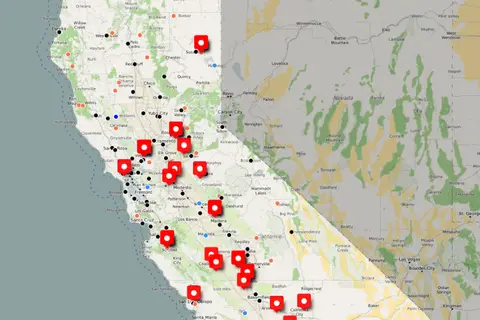
Map of All Federal Prisons in California
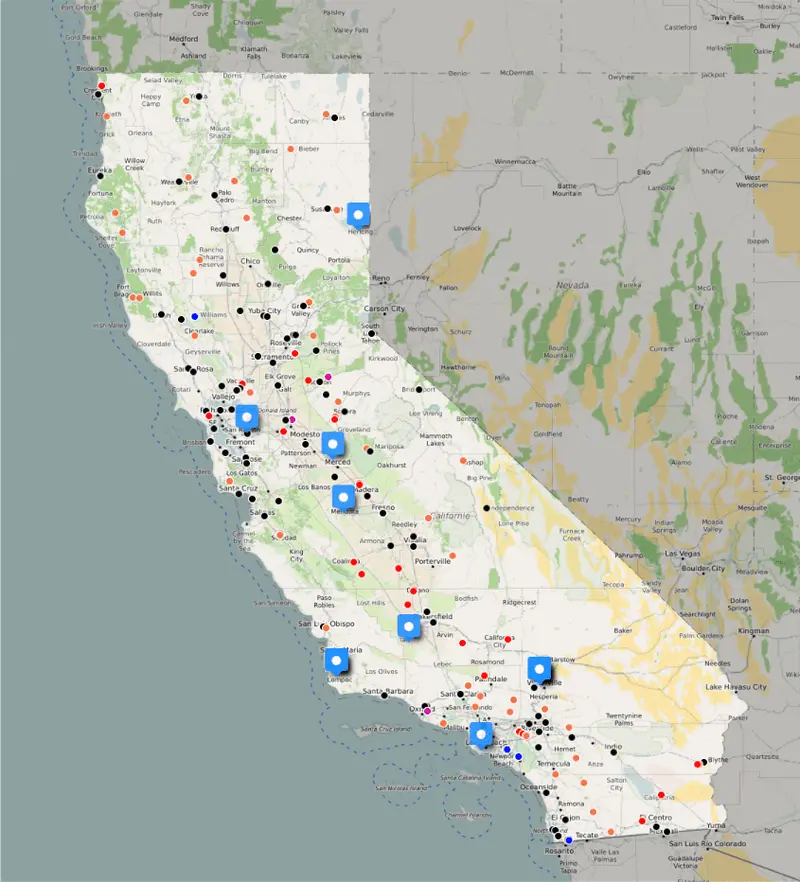
Click or tap the map to enlarge it.
Key Takeaways
- Exploring the map of all federal prisons in California provides valuable insight into the state’s correctional facilities.
- Understanding the history and distribution of these prisons can be crucial for law enforcement agencies, researchers, and policymakers.
- Utilizing this information can aid in the development of strategies aimed at improving the correctional system in California.
History
California, known for its diverse geography and substantial population, is home to several federal correctional institutions. Over the years, the state has witnessed the establishment and expansion of various prisons aimed at housing federal inmates. The map covering all federal prisons in California illustrates the distribution of these institutions throughout the state.
Unique Insights
By analyzing the map of federal prisons in California, several unique insights can be gained:
- The majority of federal prisons in California are located in the southern part of the state, including cities like Los Angeles and San Diego.
- The distribution of federal prisons in California is influenced by factors such as population density, transportation networks, and availability of suitable land.
- California has one of the highest numbers of federal prisons in the United States, reflecting the state’s significant role in federal law enforcement.
Table of Relevant Facts
| Prison Name | Location | Capacity | Opened |
|---|---|---|---|
| Federal Correctional Institution, Terminal Island | San Pedro, Los Angeles County | 1,066 | 1938 |
| United States Penitentiary, Lompoc | Lompoc, Santa Barbara County | 1,857 | 1950 |
| Metropolitan Detention Center, Los Angeles | Los Angeles, Los Angeles County | 1,625 | 1989 |
FAQ
-
How many federal prisons are there in California?
There are X federal prisons in California.
-
Which federal prison in California is the oldest?
The Federal Correctional Institution, Terminal Island is the oldest federal prison in California, established in 1938.
-
Are federal prisons in California open to the public for visits?
No, federal prisons in California are not open to the public for visits. Typically, only authorized personnel and individuals with approved visitation rights are allowed inside.
-
How can I find more information about a specific federal prison in California?
You can find more information about a specific federal prison in California by visiting the official website of the Federal Bureau of Prisons or contacting them directly.
-
What is the average capacity of federal prisons in California?
The average capacity of federal prisons in California varies but typically ranges from several hundred to over a thousand inmates.
-
Do federal prisons in California offer rehabilitation programs for inmates?
Yes, federal prisons in California provide various rehabilitation programs aimed at assisting inmates in their reintegration into society.
-
Why are most federal prisons in California located in the southern part of the state?
The concentration of federal prisons in the southern part of California can be attributed to factors such as population density, proximity to major transportation routes, and the availability of suitable land.