Global Peace Index 2014
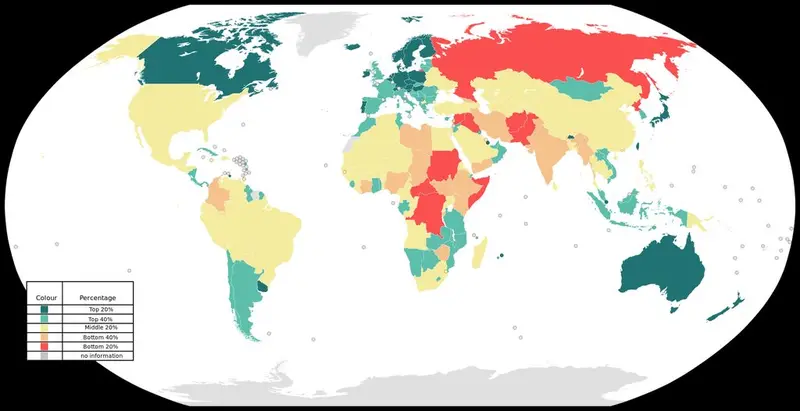
Click or tap the map to enlarge it.
Global Peace Index 2014
Introduction: Exploring the Global Peace Index 2014
The Global Peace Index (GPI) is an annual report produced by the Institute for Economics and Peace (IEP) that measures the relative peacefulness of countries and regions around the world. The GPI is based on a wide range of indicators, including levels of violence, crime rates, military expenditure, and political instability. It provides a comprehensive analysis of global peace levels, highlights prevailing trends, and offers insights into the factors influencing peace.
In 2014, the Global Peace Index revealed important insights into the state of peace in the world. Understanding the findings of the GPI and the factors impacting global peace is crucial for policymakers, researchers, and individuals committed to promoting peace and mitigating conflicts.
Understanding the Global Peace Index: Methodology and Criteria
The Global Peace Index measures and ranks 162 countries and territories based on their level of peace. The methodology takes into account a range of indicators, which are divided into three domains: Societal Safety and Security, Ongoing Domestic and International Conflict, and Militarization. Each domain comprises various indicators, such as political instability, homicide rate, intensity of internal conflicts, and military expenditure.
Each country is assigned a score on a scale of 1 to 5, with 1 being the most peaceful and 5 being the least peaceful. These scores are then used to calculate the overall GPI score and rank. The GPI covers the majority of the world’s population and provides a comprehensive overview of global peace levels and trends.
Key Findings of the Global Peace Index 2014
The Global Peace Index 2014 revealed several key findings. Firstly, overall global peace levels slightly deteriorated since the previous year, marking a decline in peacefulness. This decline was primarily driven by increased levels of internal conflicts and deteriorating political stability in various regions.
Furthermore, the report highlighted a significant increase in the economic impact of violence, which encompasses expenditures related to violence containment, as well as the effects on productivity and economic development. This finding emphasized the importance of peace not only for human well-being but also for economic progress and prosperity.
Another notable finding was the positive correlation between peace and other socioeconomic factors. Countries that ranked higher in the GPI also tended to have higher levels of positive indicators, such as better governance, higher income levels, and improved social welfare.
Factors Impacting Global Peace: Analyzing Trends and Patterns
The Global Peace Index allows for an in-depth analysis of the various factors influencing global peace. By examining the indicators within each domain, it becomes evident that peaceful societies tend to have stable political systems, high levels of social welfare, and effective governance structures. Additionally, the GPI highlights the importance of gender equality, access to education, and respect for human rights in promoting peace.
The report also reveals that ongoing conflicts, both internal and international, significantly impact global peace levels. The escalation of conflicts leads to increased violence and instability, negatively affecting peace not only in the countries directly involved but also in neighboring regions.
Region-wise Analysis: Assessing Peacefulness across Continents
The Global Peace Index provides a region-wise analysis of peace levels across continents. This analysis allows for a comprehensive comparison of peacefulness between different regions and identifies areas that require special attention and interventions. In 2014, Europe remained the most peaceful region, while the Middle East and North Africa (MENA) region experienced the largest deterioration in peace levels.
Understanding regional variations in peace levels can help policymakers identify specific challenges and develop targeted strategies to promote peace and mitigate conflicts. It is essential to consider the unique historical, cultural, and political contexts of each region in order to implement effective peacebuilding initiatives.
What Does Peace Mean: A Comparative Analysis of Countries
Peace can have different meanings and interpretations depending on the country and its particular circumstances. The Global Peace Index provides a comparative analysis of peace levels between countries and offers insights into the factors contributing to peace or hindering its attainment.
By studying the countries that rank high in the GPI, we can identify common characteristics associated with peace. These characteristics often include well-functioning democratic institutions, minimal corruption, equitable access to resources, and respect for human rights. On the other hand, countries facing significant peace challenges tend to exhibit high levels of political instability, social inequality, and economic disparities.
Frequently Asked Questions (FAQs) about the Global Peace Index 2014
-
Q: What is the objective of the Global Peace Index?
A: The Global Peace Index aims to provide a quantitative measurement of peace levels worldwide, enabling policymakers and researchers to understand the factors influencing peace and guide efforts for conflict resolution and peacebuilding.
-
Q: How are the countries ranked in the Global Peace Index?
A: The countries are ranked based on their overall GPI score, which is calculated using a range of indicators such as violence, political stability, military expenditure, and social welfare.
-
Q: Has global peace improved or deteriorated since the previous year?
A: The Global Peace Index 2014 revealed a slight decline in overall global peace levels compared to the previous year, indicating a deterioration in peacefulness.
-
Q: How does conflict impact global peace?
A: Ongoing conflicts, both internal and international, have a significant negative impact on global peace. They lead to increased violence, political instability, and social unrest, affecting peace not only in the directly involved countries but also in neighboring regions.
-
Q: What are the indicators used in the Global Peace Index?
A: The indicators used in the GPI include levels of violence, crime rates, political instability, military expenditure, access to education, and respect for human rights.
Conclusion: Taking Steps Towards a More Peaceful World
The Global Peace Index 2014 offers valuable insights into global peace levels, trends, and the factors impacting peace around the world. By understanding the findings of the GPI and its regional variations, policymakers and individuals can work towards promoting peace and resolving conflicts.
It is crucial to address the root causes of violence and conflict, promote social justice, and foster inclusivity and equality. By investing in education, sustainable development, and effective governance, societies can take steps towards creating a more peaceful and harmonious world for current and future generations.