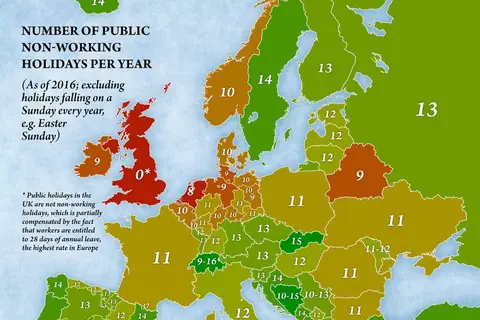
Map of Countries That Do Not Recognize Christmas as Public Holiday
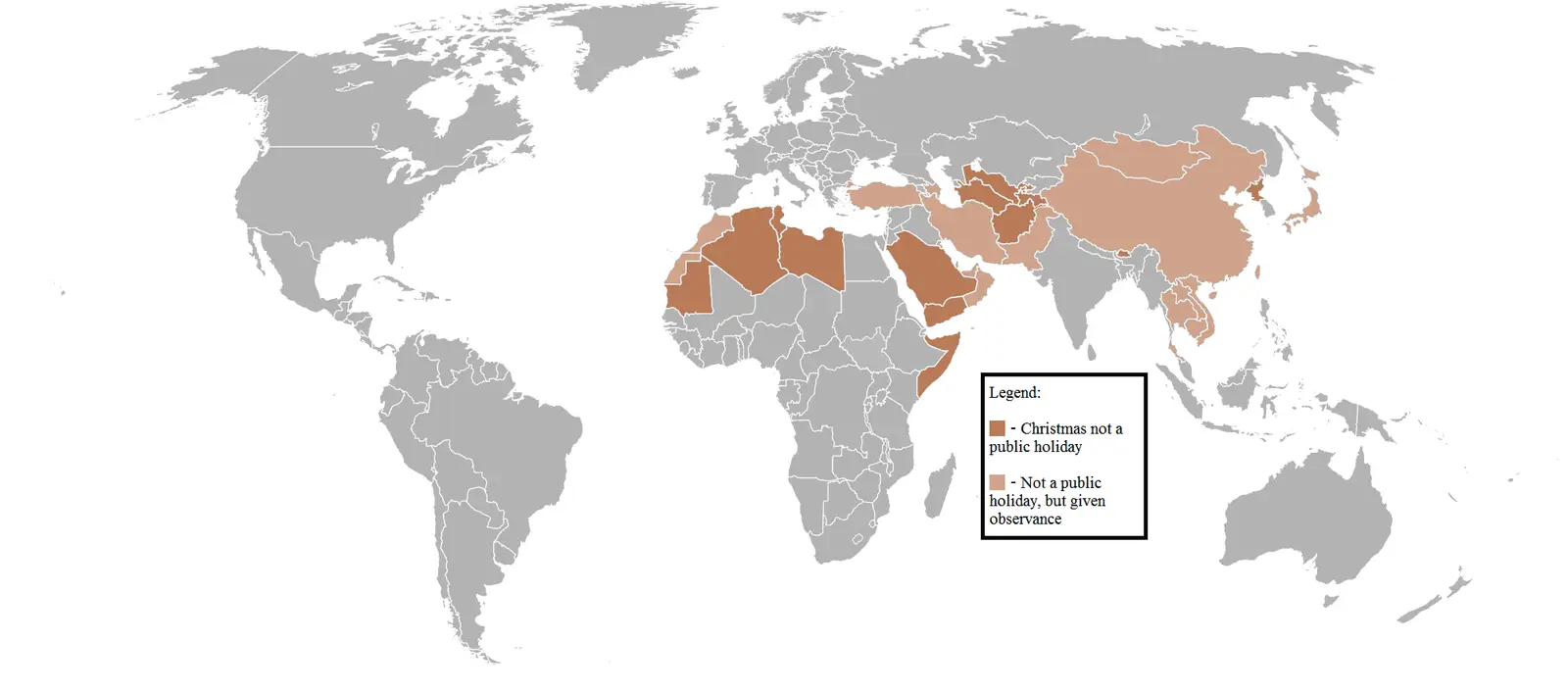
Click or tap the map to enlarge it.
Key Takeaways
- Many countries around the world do not recognize Christmas as a public holiday.
- The reasons for not recognizing Christmas vary, including the prevalence of different religious or cultural practices in these countries.
- Political and historical factors also play a role in the non-recognition of Christmas in certain countries.
- Understanding the global variations in the recognition of Christmas can broaden our cultural knowledge and foster respect for diverse traditions.
Map of Countries That Do Not Recognize Christmas as a Public Holiday
As a cartographer, I present to you a map illustrating the countries around the world that do not officially recognize Christmas as a public holiday. This map offers a unique perspective on the global diversity of cultural and religious practices, and highlights the countries where Christmas celebrations may differ significantly.
History
The history of Christmas as a recognized public holiday dates back to the fourth century when Emperor Constantine declared December 25th as the official feast day to celebrate the birth of Jesus Christ. However, over the centuries, various regions and countries developed their own traditions and practices concerning Christmas.
There are several reasons why some countries do not recognize Christmas as a public holiday:
Cultural and Religious Diversity
In many countries, Christmas is not recognized as a public holiday because other religious or cultural traditions hold a more prominent role. For instance, in predominantly Islamic countries like Saudi Arabia and Afghanistan, the celebration of Christmas is not widespread since Islam is the dominant religion. These countries prioritize their own religious holidays and Islamic traditions over Christmas.
Similarly, countries with significant non-Christian populations may not officially recognize Christmas as a public holiday. In India, for example, where Hinduism and Islam are the major religions, Christmas is not a government-recognized holiday. However, Christians in India celebrate Christmas as a religious festival in their own communities and churches.
Historical and Political Factors
Historical and political factors can also influence the official recognition of Christmas. In some countries, the separation between church and state plays a role in the non-recognition of Christmas. These countries prioritize secularism and refrain from endorsing any specific religious holiday.
For instance, Japan does not recognize Christmas as a national holiday, influenced by historical factors and the absence of a strong Christian presence. Nevertheless, Christmas is celebrated in Japan primarily as a commercial and cultural event, with festive decorations and gift exchanges.
In countries with a communist history or influence, such as China and North Korea, Christmas is not officially recognized as a public holiday due to the promotion of atheism. However, these countries have seen a rise in private celebrations and commercialization of Christmas in recent years.
Unique Insights
In exploring countries that do not recognize Christmas as a public holiday, we gain valuable insights into the diversity of cultural and religious practices worldwide:
- It is essential to respect and acknowledge the practices and celebrations of different cultures, even when they differ from our own.
- Understanding the reasons behind non-recognition can help foster inclusivity and empathy towards diverse traditions.
- The commercialization of Christmas has led to its adoption as a cultural event or an opportunity for shopping and gift-giving, even in non-recognizing countries.
- Religious diversity plays a significant role in determining which holidays are officially recognized in different countries.
- The celebration of Christmas, even without official recognition, can still be observed within certain communities or among individuals who choose to celebrate it privately.
Table of Relevant Facts
| Country | Reason for Non-Recognition |
|---|---|
| Saudi Arabia | Islam is the dominant religion, and Islamic holidays take precedence. |
| Afghanistan | Islamic traditions prevail, and celebrating Christmas is limited. |
| India | Christmas is not a government-recognized holiday due to the diverse religious landscape, but Christians celebrate it privately. |
| Japan | Historical and cultural factors contribute to the non-recognition of Christmas as a national holiday, although it is celebrated on a cultural and commercial level. |
| China | Communist ideology discourages religious celebrations, leading to the non-recognition of Christmas as a public holiday. |
| North Korea | Atheism promoted by the state results in the non-recognition of Christmas, but private celebrations and commercialization occur. |
FAQs
1. Why do some countries not recognize Christmas as a public holiday?
There are various reasons, including cultural and religious diversity, historical factors, and political ideologies that prioritize secularism or discourage religious celebrations.
2. Does the non-recognition of Christmas mean it is not celebrated in these countries?
No, even in countries that do not officially recognize Christmas, private celebrations and cultural events related to the holiday may still take place.
3. Are there any countries with no religious holidays?
While some countries prioritize secularism, many still have recognized religious holidays based on their dominant religion or cultural practices.
4. Can tourists celebrate Christmas in countries that do not officially recognize it?
Yes, tourists can still celebrate Christmas, although they should be aware of local customs and sensitivities surrounding religious practices.
5. Are there any countries where Christmas is a public holiday but not widely celebrated?
Yes, in some countries where Christianity is a minority religion, Christmas may be a public holiday but celebrated only among Christian communities.
6. How does the commercial aspect of Christmas affect its recognition?
In non-recognizing countries, the commercialization of Christmas often leads to its adoption as a cultural event or as an opportunity for shopping and gift-giving.
7. Are there any ongoing discussions about recognizing Christmas in some non-recognizing countries?
In certain countries, there are ongoing debates and discussions surrounding the recognition of religious holidays, including Christmas, as a reflection of changing demographics and cultural dynamics.